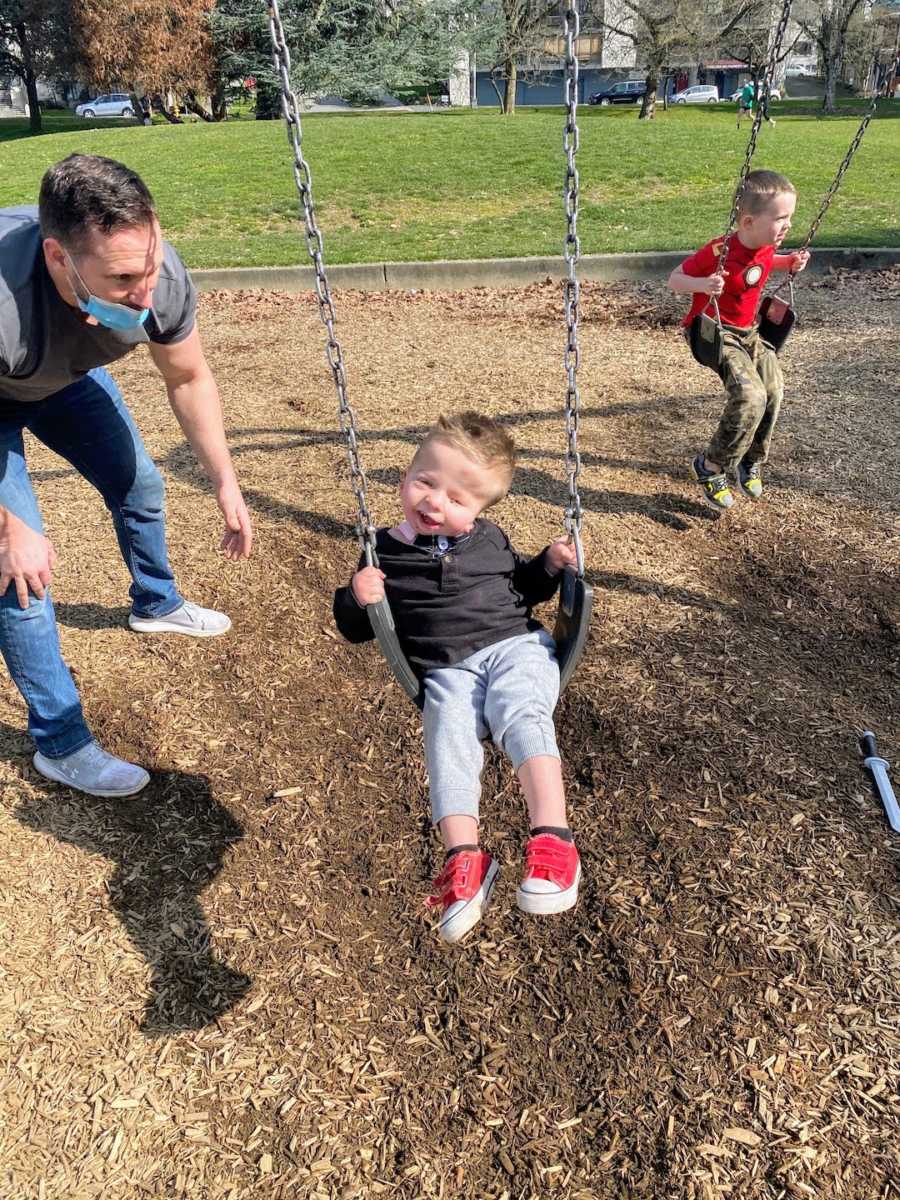
I pushed my son’s wheelchair down the sidewalk alongside his preschool class, my heart pounding and palms slick with anxiety. I found myself wishing the sky would open and let rain fall so we could stay inside. But the sun was relentless, glaring down on us as if to mirror the tension I felt. When we arrived at the playground, I parked William’s wheelchair while his classmates darted eagerly toward the swings and slides. Will waited patiently, as he always does, for me to help him out so he could join them. I scanned the playground and, as I feared, saw the older kids from a nearby school already there, sitting in groups along the edges of the equipment, eating their lunches.
I took a deep breath and helped William onto the sidewalk. He loves to wander slowly around the playground, watching his friends play and saying hello to anyone who stops to greet him. He headed straight for the nearest group of kids, and I followed closely behind. As we drew nearer, the words reached my ears.
“Look, the weird kid is back.”
“Hey! It’s the creepy kid! Look at him!”
“That kid’s gonna die soon.”
“Seriously! Look at his ears!”
Will walked past the group, oblivious to the cruel chatter, his small steps steady but cautious. My chest burned with anger and helplessness. I wanted to confront them, to shout, “How dare you talk about my child that way?” I wanted to shame them into realizing the cruelty of their words. But I didn’t. I stayed behind, heart aching, thinking only of ways to protect my son from their ignorance—for now, he either didn’t hear them, or didn’t yet understand.
We continued our slow circuit around the playground. Will’s steps are getting steadier, though he still stumbles, so we go carefully. After a few minutes, I began to think more clearly. Why did their words make me so angry? It wasn’t just the cruelty—it was the ignorance, the prejudice hiding behind their laughter. They had already decided that someone who looked different from what they expected was “weird” or “scary.”
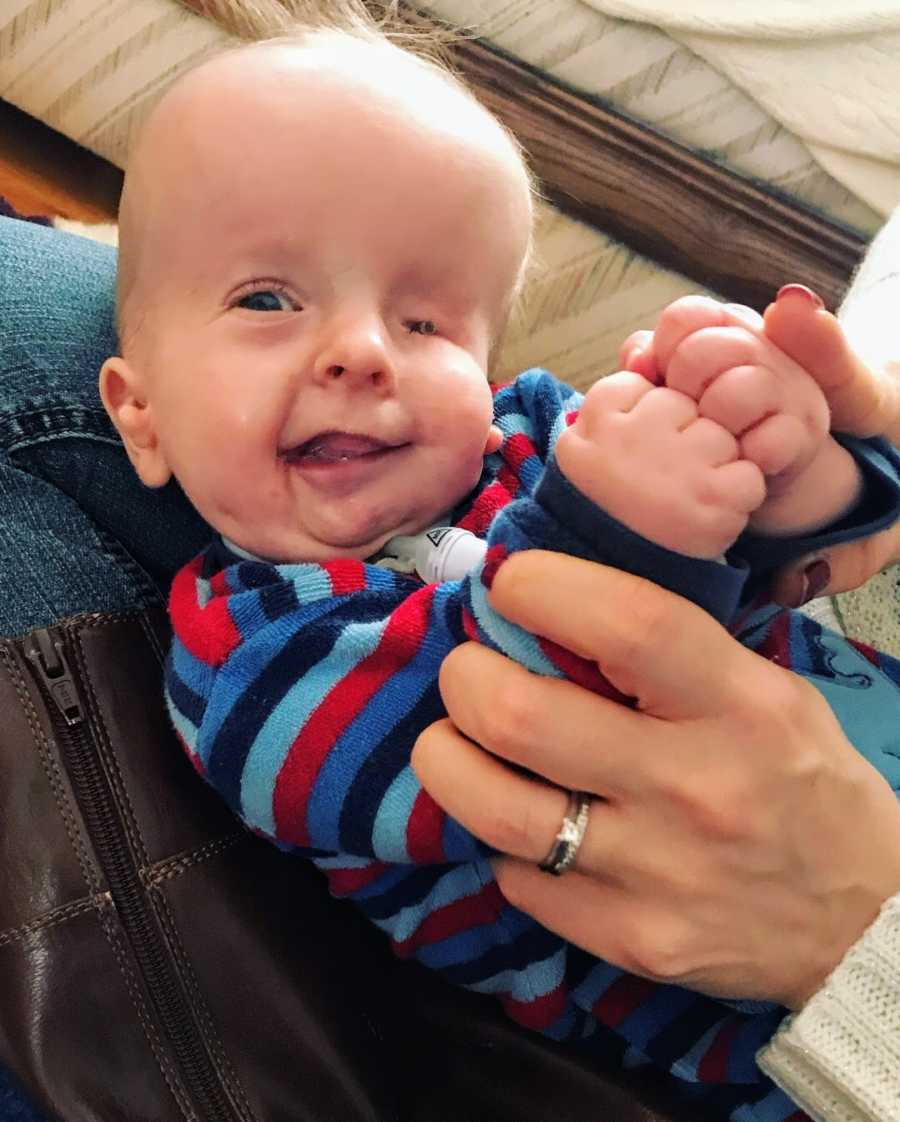
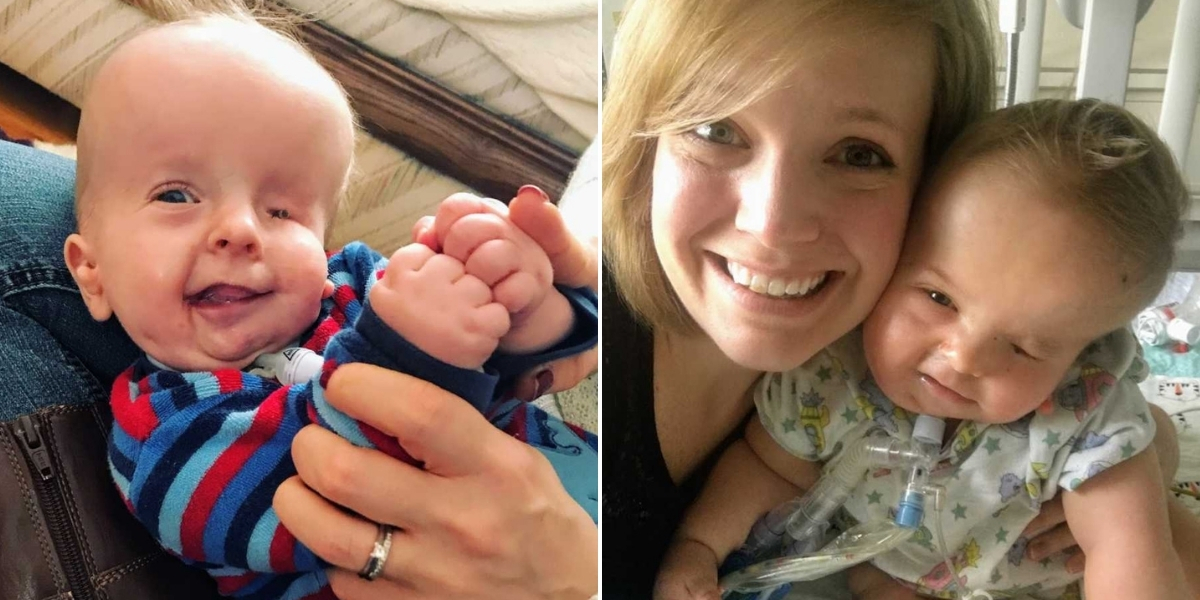
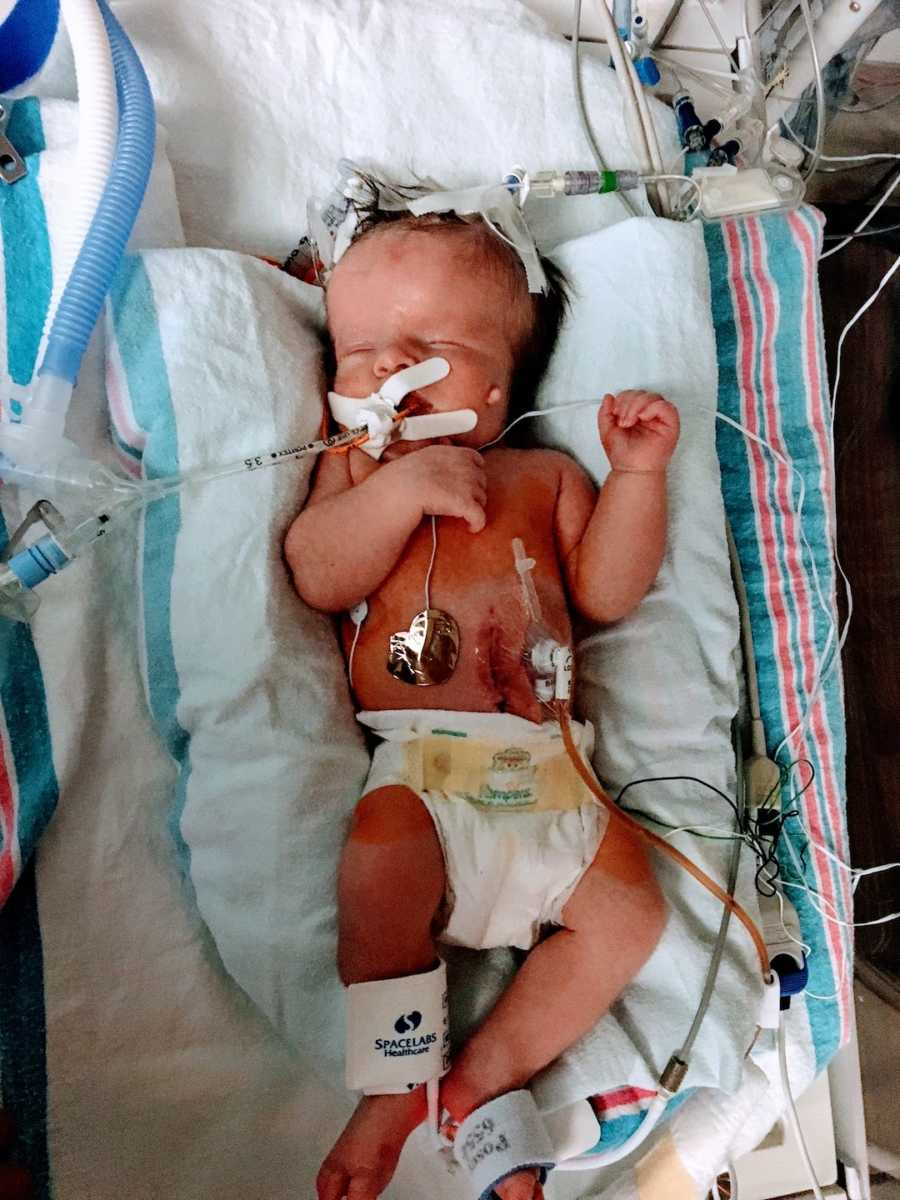
They didn’t know William. They didn’t know he has Goldenhar syndrome and hemifacial microsomia. They didn’t know he was born without his left eye and ear, completely blind and deaf on that side. They didn’t know that in his first two months of life, he teetered on the edge of death countless times because he couldn’t breathe without assistance, that he needed a tracheostomy to survive. They didn’t see the months he spent gaining enough weight to finally appear on a growth chart, or the countless hours we spent in therapy—both of us crying as he struggled to roll over, sit, crawl, stand, and eventually walk. They didn’t see me sobbing uncontrollably in the shower, wishing I could absorb all his suffering. They didn’t witness me frozen outside his hospital room as the medical team performed chest compressions to revive him after a sudden code.
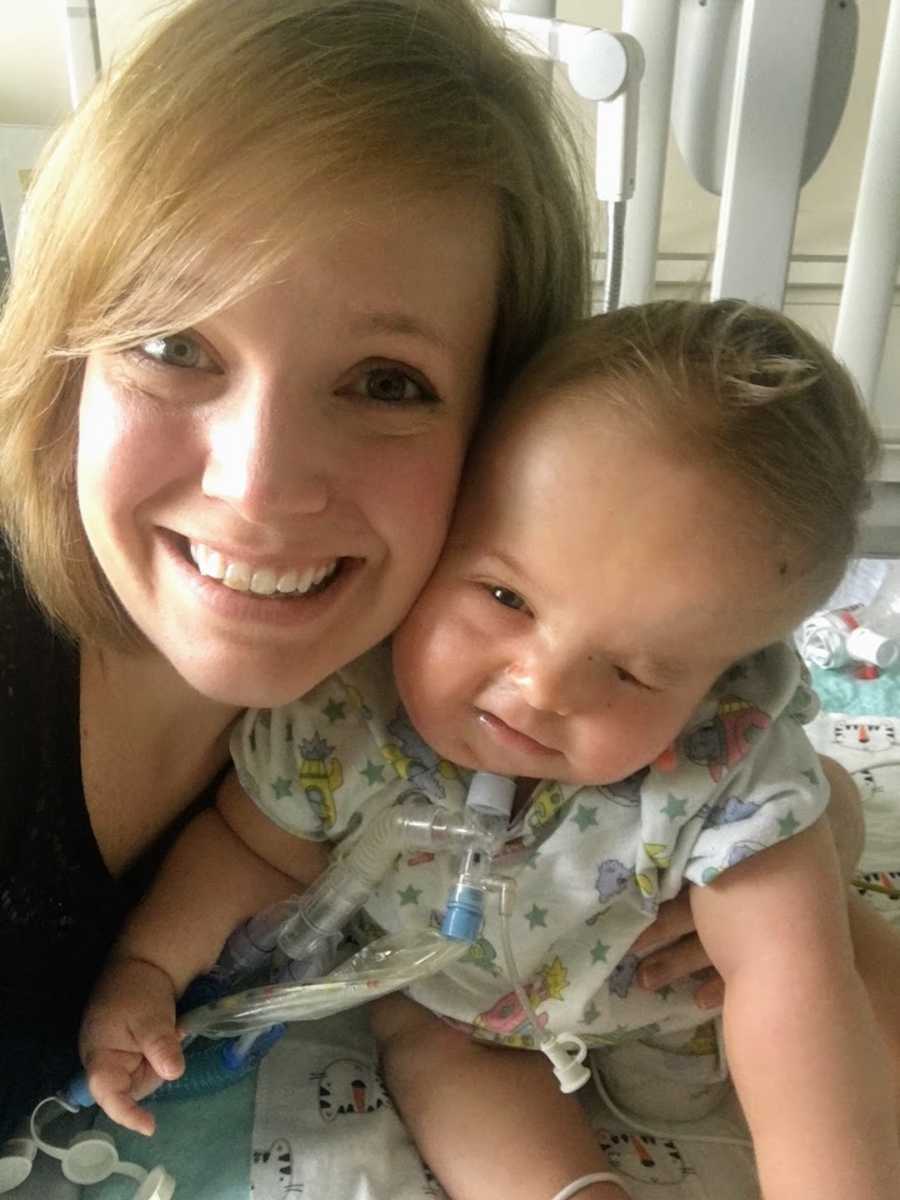
They didn’t know how joyful and funny William can be. They hadn’t seen his heart-melting smiles, his goofy little jokes, or the determination in his eyes when he communicates in sign language. They didn’t know he loves pizza and chocolate ice cream, that green is his favorite color, or that given a choice of TV shows, he’ll always choose Paw Patrol. They hadn’t witnessed him mimic his older brother’s daring antics or watch him stand by my side, mesmerized, as I play the piano.
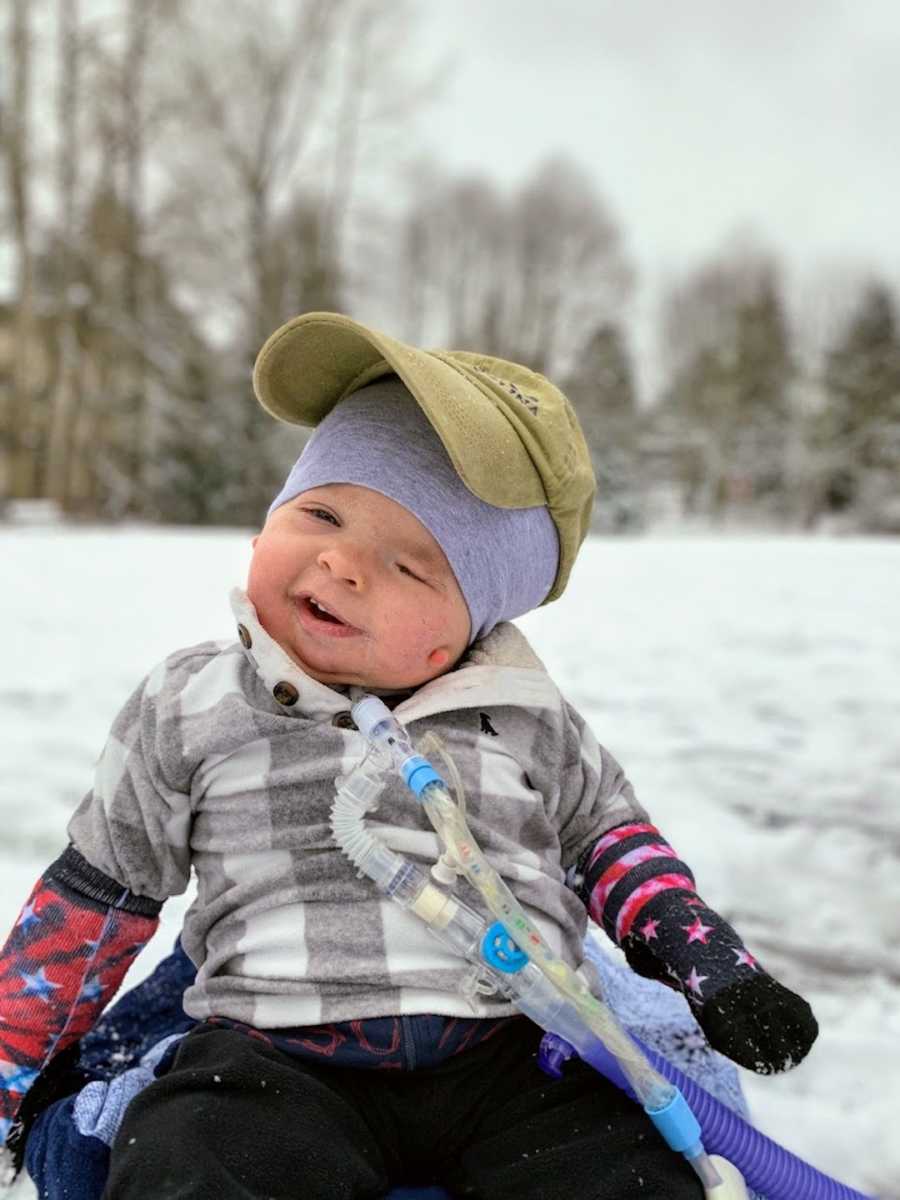
All they saw was a child who walked with a slight tilt caused by scoliosis, whose left ear was replaced by a small skin tag on his cheek. They saw “difference” and immediately turned it into mockery. For three weeks, this had been happening. I couldn’t stay silent any longer.
I approached William’s teacher, who was nearby supervising the other children. She is deaf and hadn’t realized the teasing. I stumbled over my words in beginner ASL, trying to explain. “William needs to meet that class,” I said. “They’re calling him weird and creepy. He can hear them, even if he doesn’t fully understand yet. I think they need to meet him because a lot of kids assume different means scary.”
Her eyes widened in concern. She promised to speak with the other teachers and arrange a time for them to meet William. I expected it would take a week or two. But within five minutes, the teachers were talking, and soon we were walking past the class again. The change was instantaneous.
The children stood, approaching cautiously. Hesitant greetings were exchanged, questions asked.
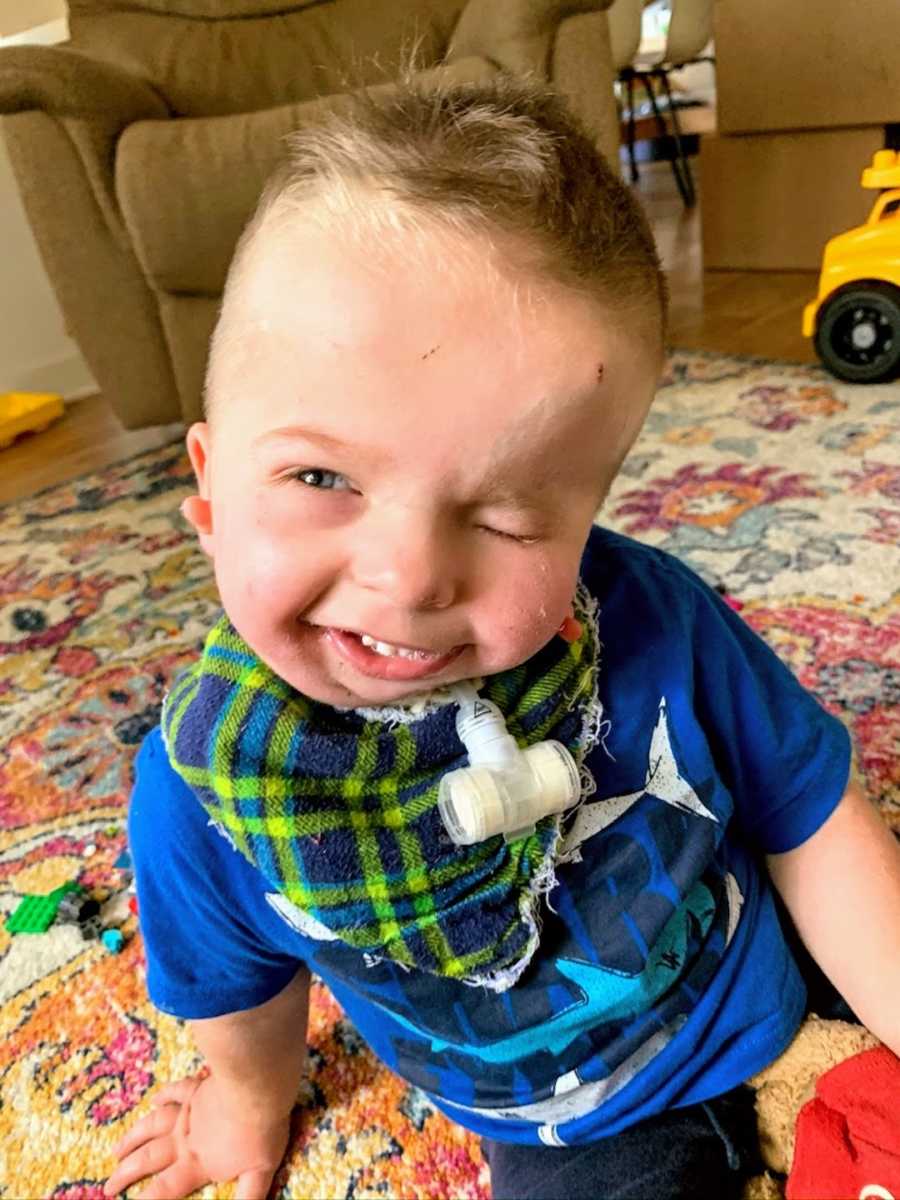
“Why is his eye closed?”
“What’s on his neck?”
“Why is his head tilted?”
“What’s on his cheek?”
I answered simply, truthfully, and William smiled, waving at the crowd pressing in around him. “Can he talk?” one girl asked. “Not yet,” I said, “but he can use sign language.” At that moment, nearly every child used the one sign they knew: I love you. William glowed as he signed it back. Though the encounter was brief—his energy waning and their schedules calling—the progress was enormous.
A week later, William’s school day came again. He started his usual route around the playground, and this time he was met with a chorus of greetings: “Hi, William!” “William is here!” Fewer questions, more smiles, less caution. One girl asked how to say “hi” in sign language. They were eager to be his friends.
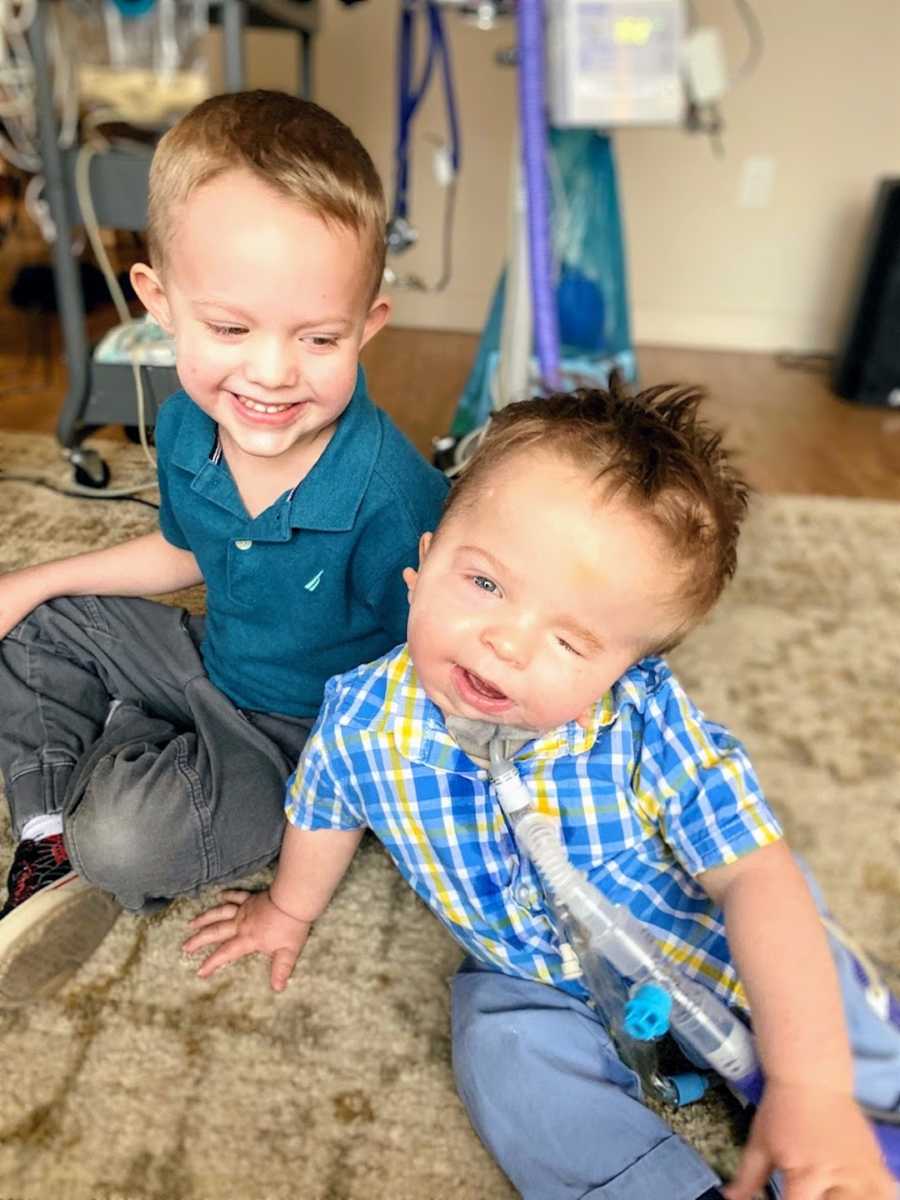
Raising a child with an obvious facial difference is a delicate journey. I want William to grow up confident, kind, and discerning. He needs to know he gets to choose whose voices matter and whose opinions he will allow to shape him. And the most important voice of all isn’t that of a kid at the park, a teacher, or even mom or dad—it’s the voice of Jesus, who calls him priceless, loved, and chosen. If he listens to that voice, navigating the world becomes easier, even when others don’t understand.
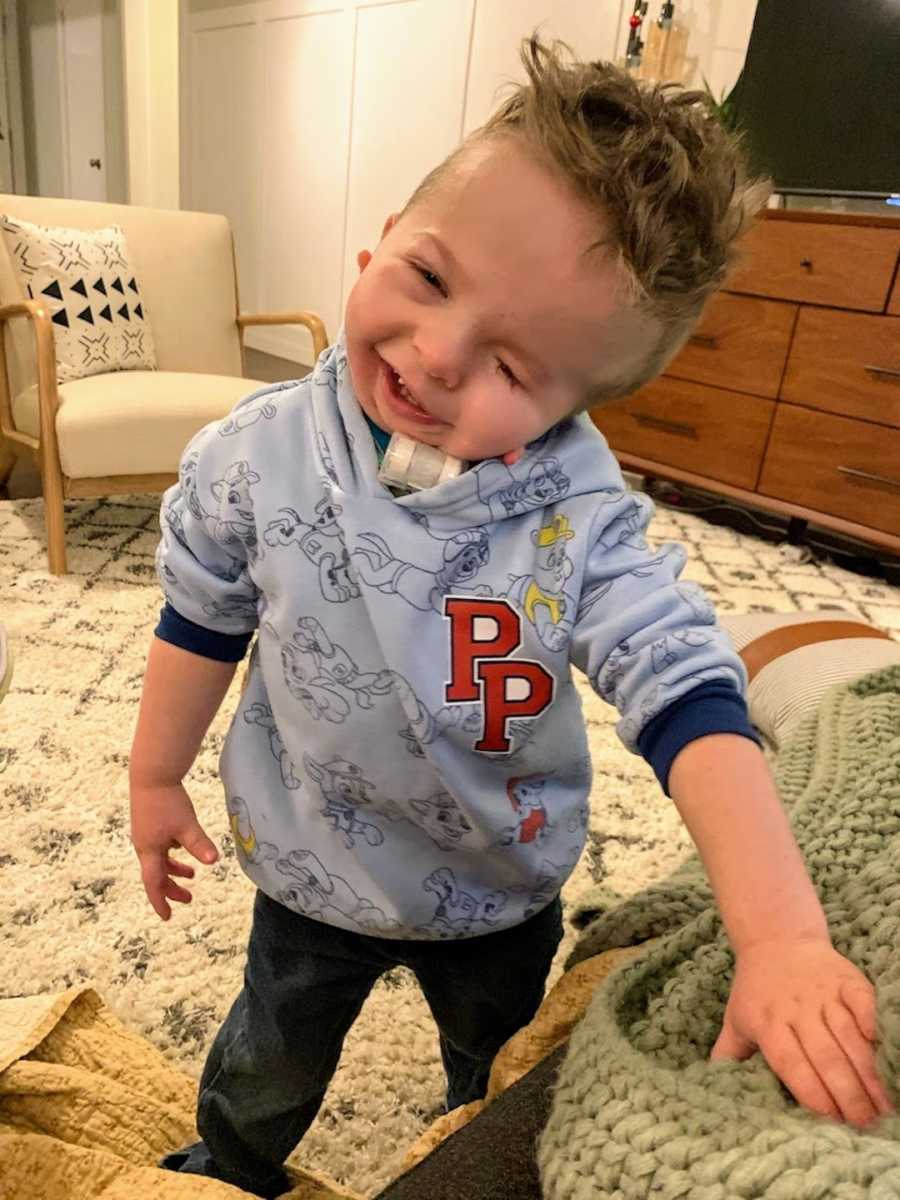
The children on the playground didn’t know they could ask questions, so they assumed. But when given a small opportunity to learn, they were eager to make a new friend. All it took was a little understanding. There are more friends in the world than we realize. The world would be brighter if, when parents hear their children making assumptions about a child like William, they lean in, help them learn, and create opportunities for friendship. Ask a name. Play together. Bridge the gap. We are far more alike than different.