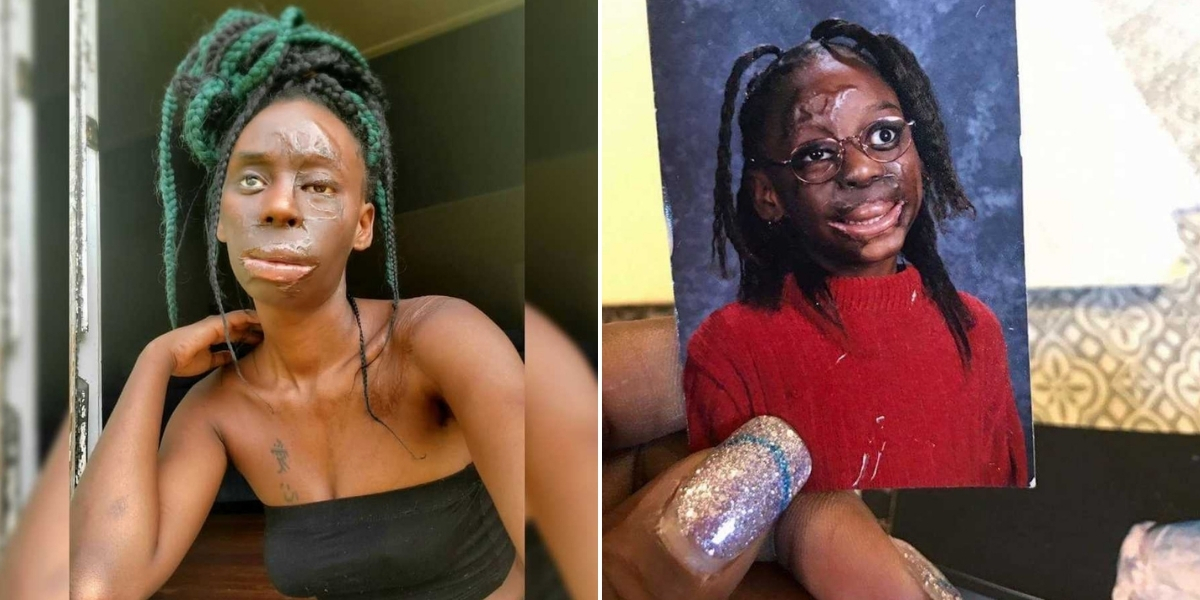
I was severely burned when I was just 2 years old, which means I don’t really know exactly what happened. The details are all secondhand, passed down through stories from my family. My maternal side has one version of events, my paternal side another, and the truth—well, I’ll likely never know it fully.
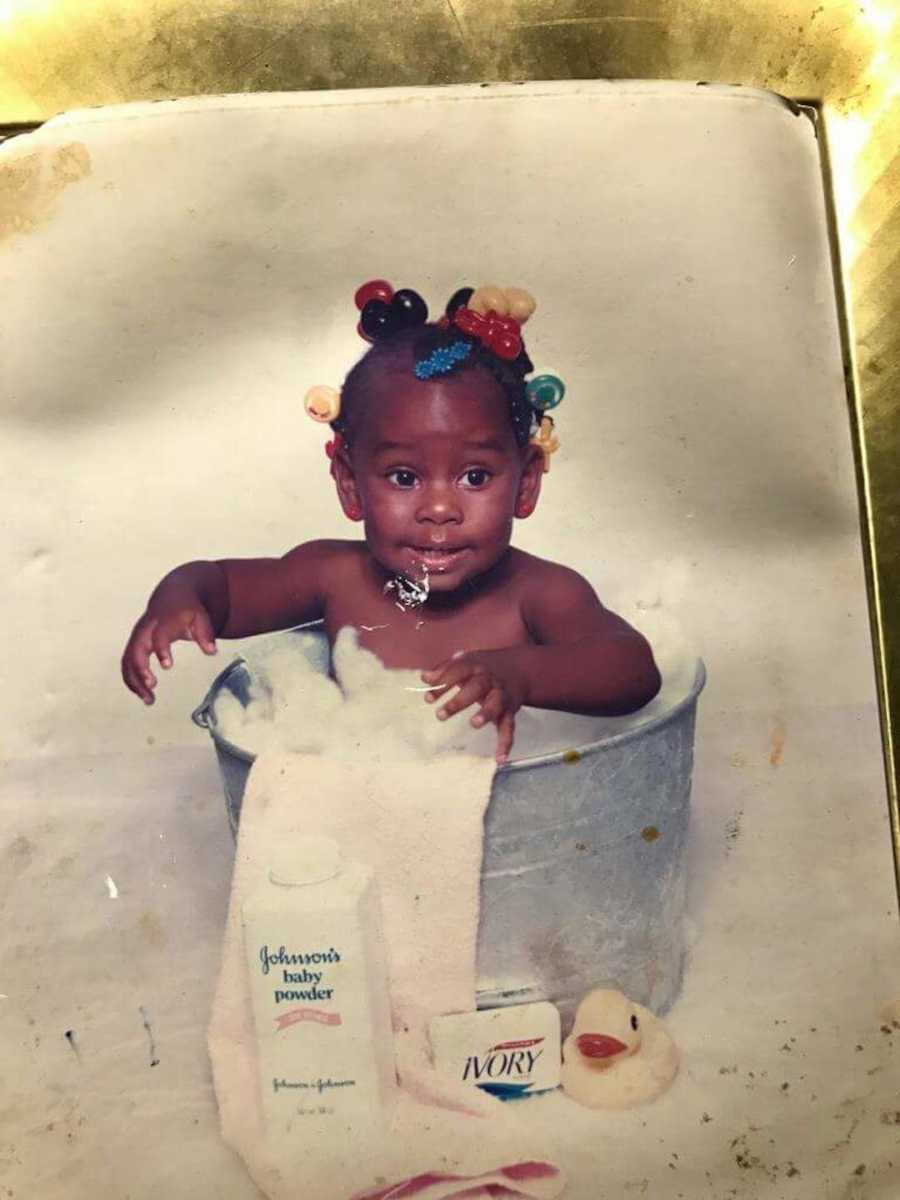
It all began on Memorial Day when my mother dropped me off at my grandmother’s house. I was apparently left alone in the kitchen, and somehow, I pulled a hot pot of butter off the stove—right onto my face. Miraculously, my head and scalp were untouched, but the burns were severe. I was rushed to the hospital, and from there, my life changed in ways no child should have to face. I went into a coma, my head swelled to twice its normal size, and doctors feared the worst—they thought I might never see again.
My family was told something no one ever wants to hear: “The accident was so severe, there is no way she will make it.” They were instructed to call a pastor and a funeral home, preparing for the worst. I stayed in that coma for two long weeks. When I finally woke, doctors discovered that I had regained some vision—just in my right eye—but it was enough to give my family hope.
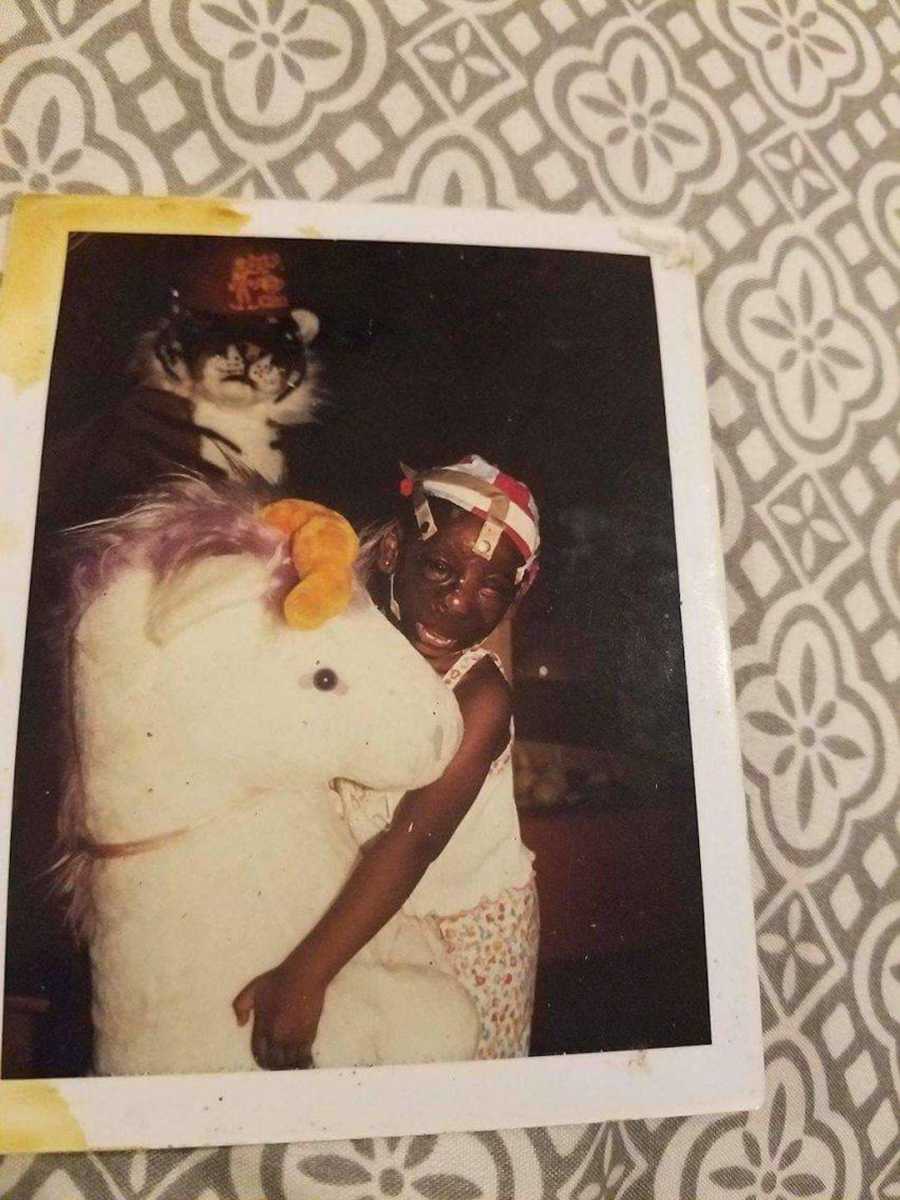
Even now, my paternal family doesn’t fully believe I pulled the pot down myself. They question the height and placement of the burns, and their skepticism has lingered for years. I’ve learned to take their doubts as just another part of my story.
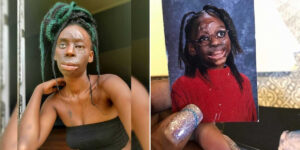
For me, being burned and living in and out of hospitals was all I knew. It was normal. My family never treated me differently from my siblings or cousins, so I had no idea I looked different until I started school. That’s when I first felt the sting of being an outcast. Kids would point, whisper, and sometimes shout, calling me ugly or even a monster. But because my family never labeled me as a “burn victim,” I never internalized that label myself.
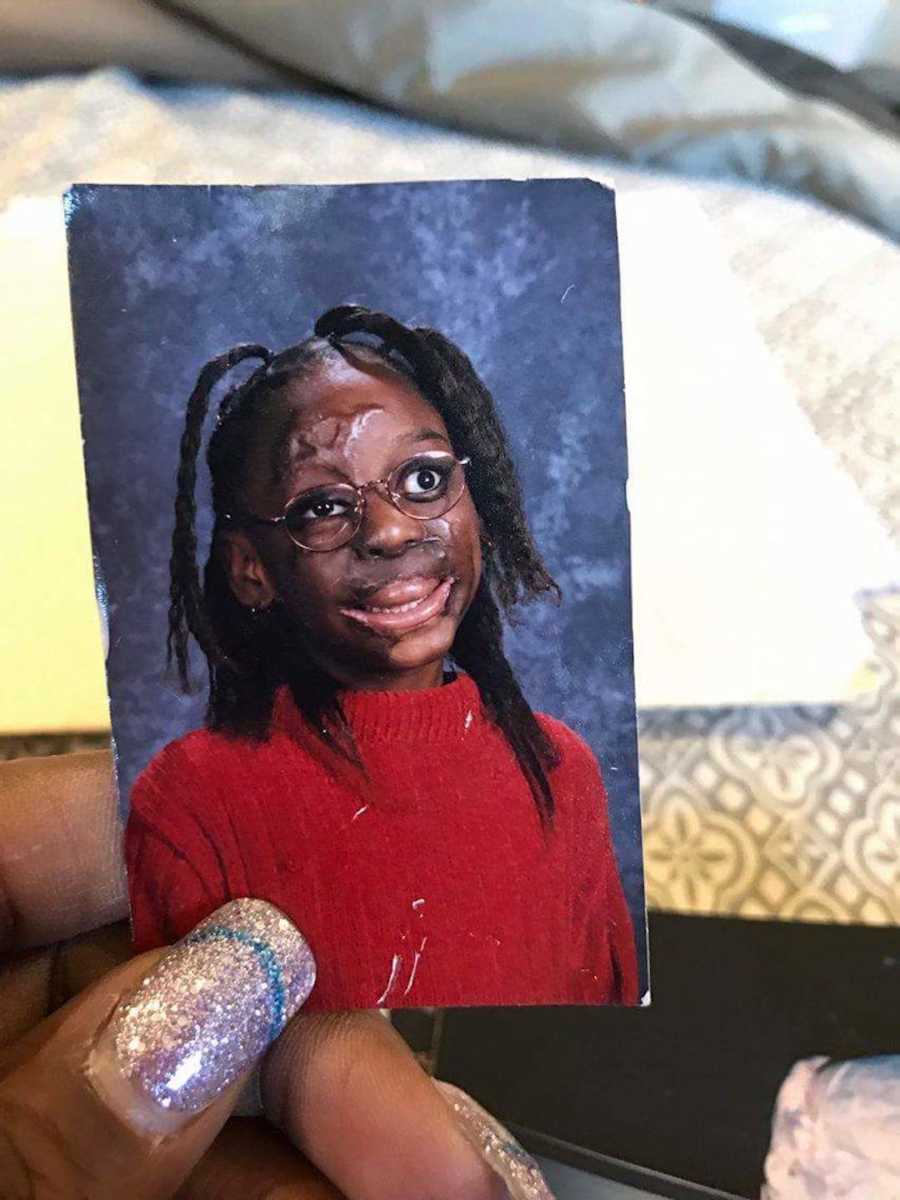
I quickly learned to meet cruelty with humor and strength. When kids would call me ugly, I’d shoot back with, “Yo mama,” and refuse to let anyone corner me. I knew I had fought for my life, and I wasn’t about to back down in any arena.
As a child, I tried desperately to fit in, but my scars made me stand out no matter what I did. I realized that if I wanted to truly live, I had no choice but to rise above the judgment. At 13, I made a pact with myself: I would never fit in, and I could never hide in a crowd—or rob a bank, for that matter. Instead of shying away, I decided to embrace the spotlight. If people were staring, I would give them a show.
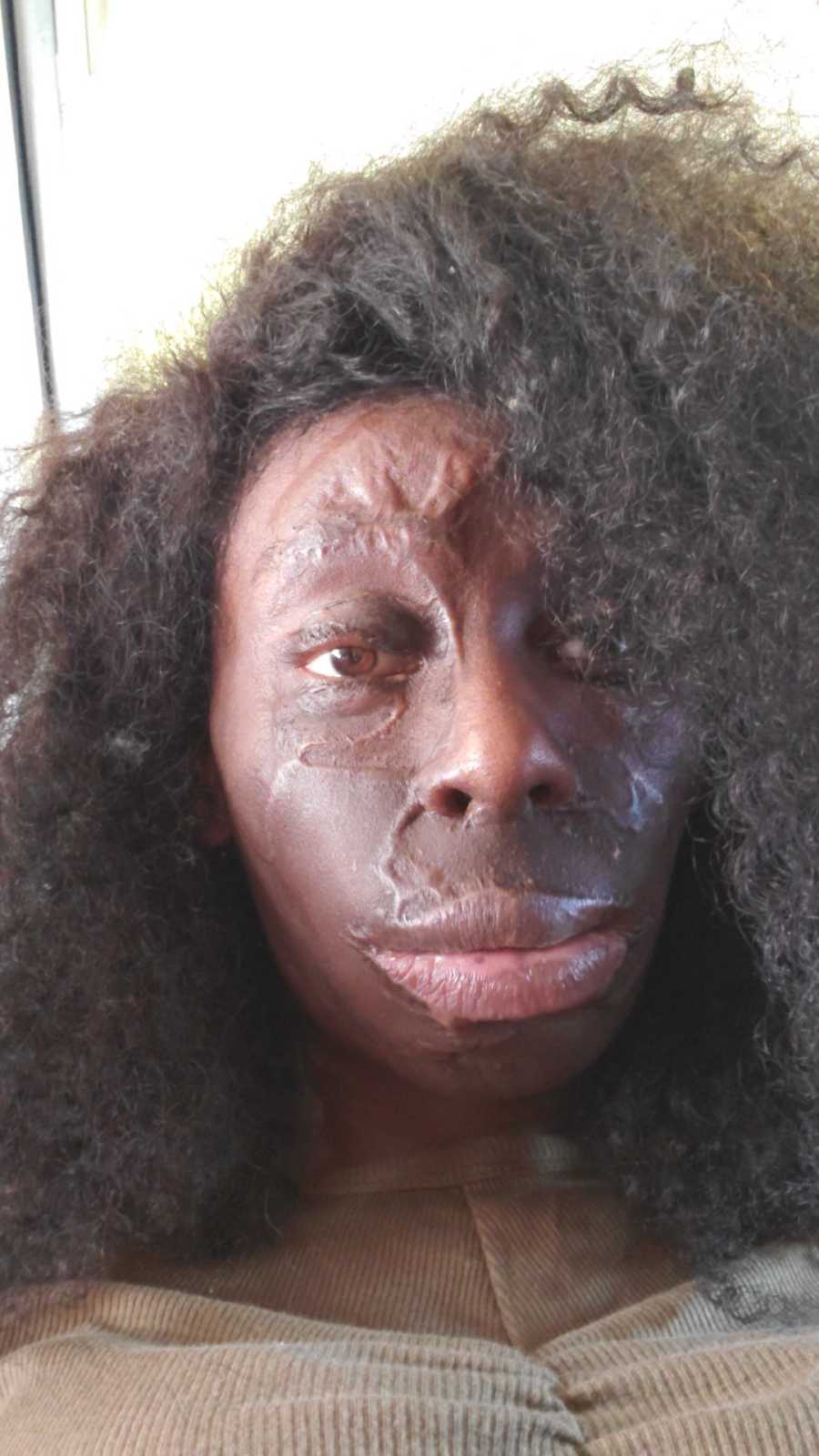
Everyone has flaws. People say only one perfect person ever walked this earth, and they killed him. So, I choose to be the main character in my story, flaws and all. I am a walking Picasso—literally one of a kind—and I have decided to live authentically, savoring every second of this short, precious life.
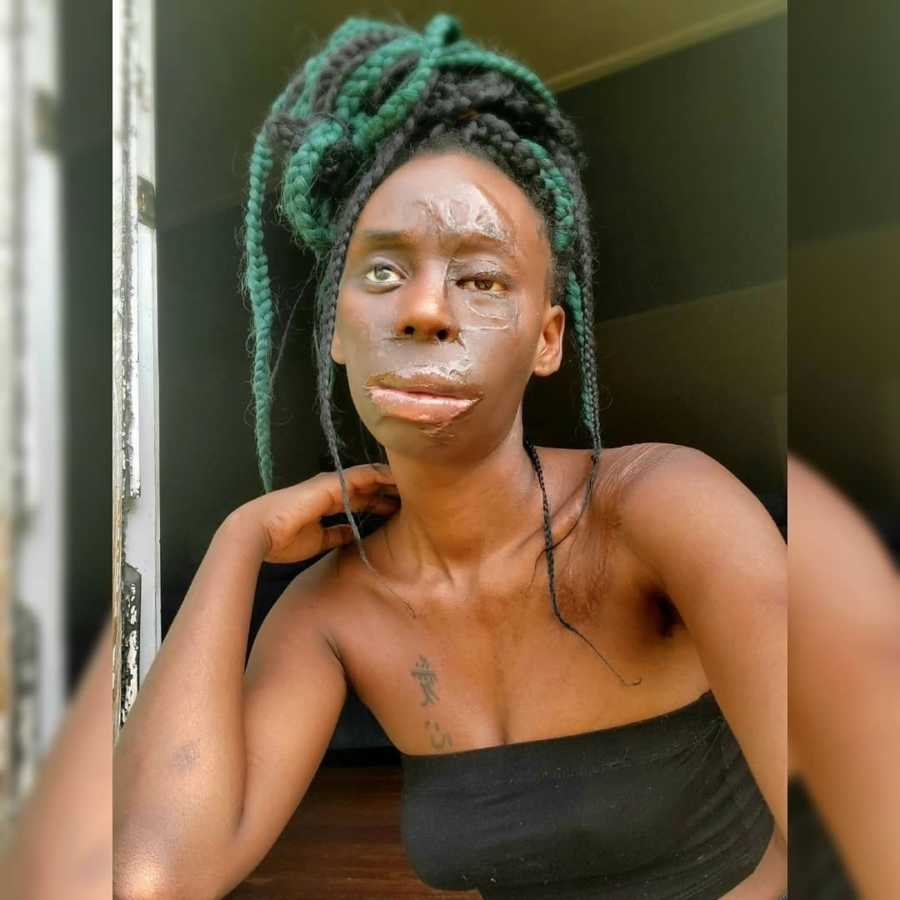
“I Wear My Flaws Like Diamonds.” That’s not just the name of my business; it’s a mantra I live by. Pressure creates diamonds, and after everything I’ve been through, I feel almost indestructible—sparkling, even. Instead of hiding what makes me different, I embrace it, wearing my scars proudly, like my favorite accessory. Like a diamond, my flaws are a part of me, shining brightly for the world to see.