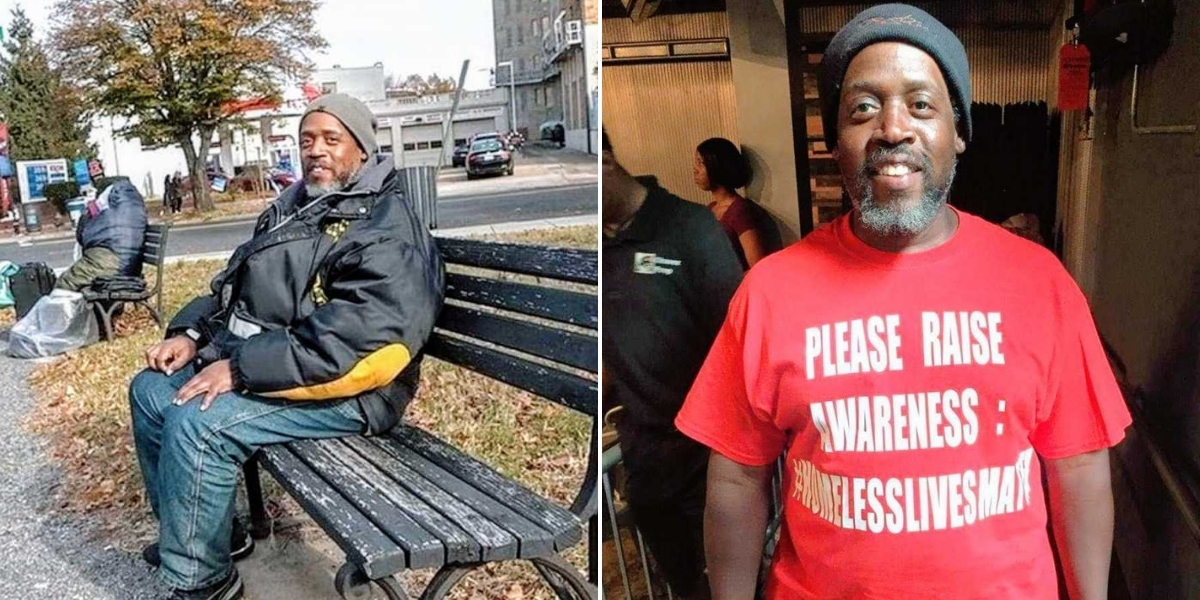
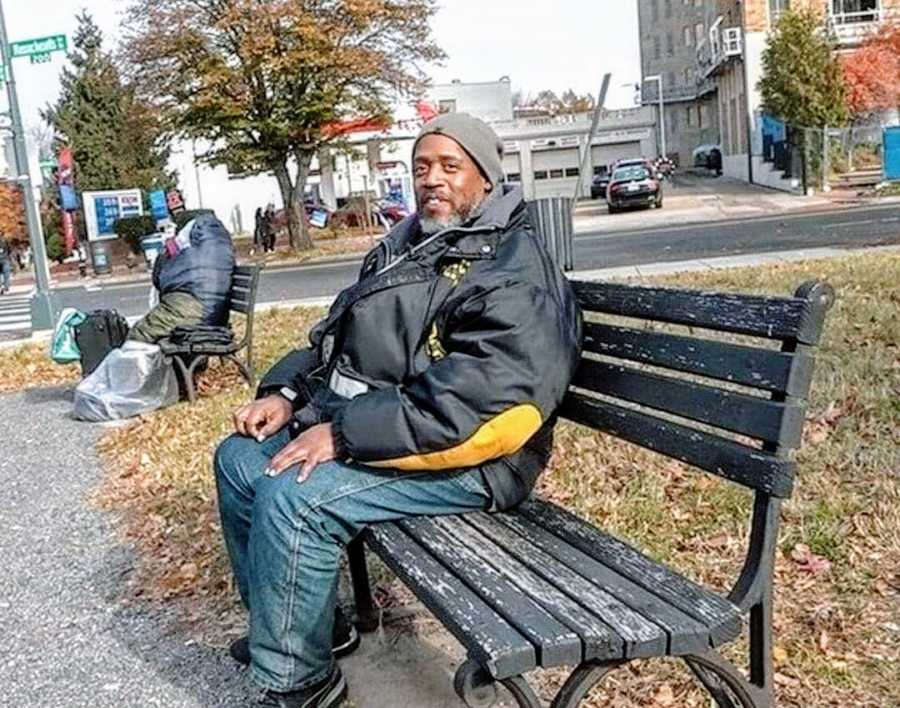
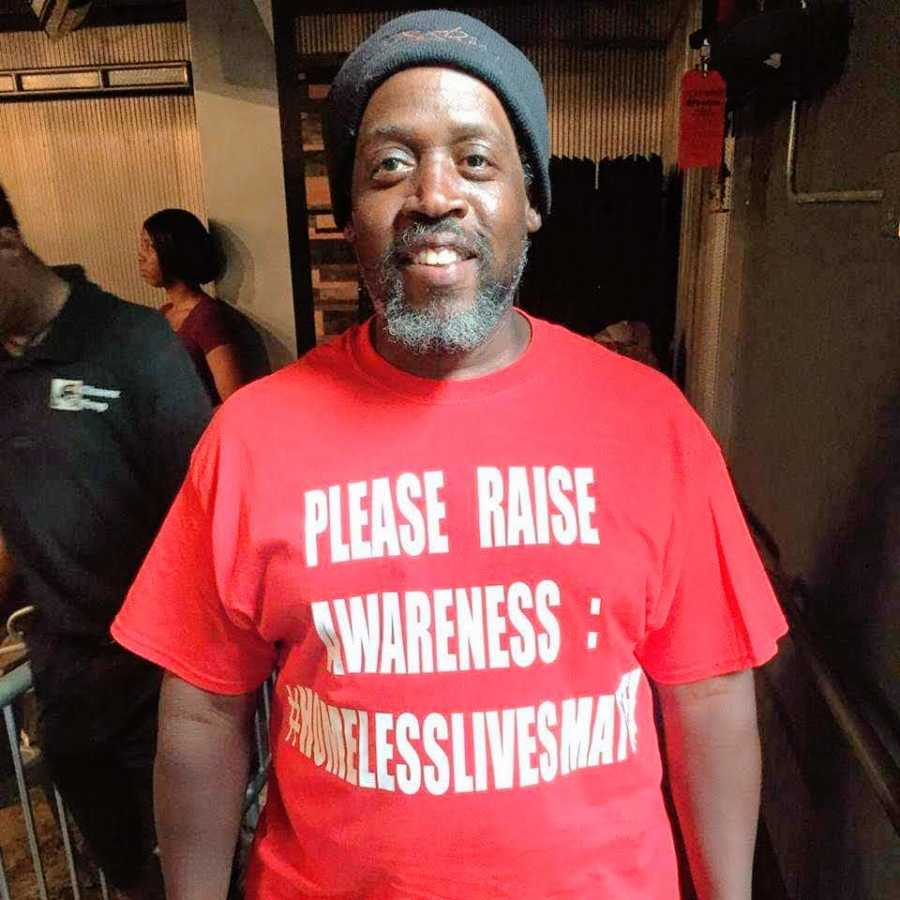
Charles Purcell was born in Pittsburgh, Pennsylvania, and later moved to the Washington, DC area in 1984. Life took many turns for him, but since 2015, he has experienced homelessness firsthand. Today, he is using his voice to inspire change, uplift his community, and give hope to those who feel unseen.
Q: How did you end up homeless?
A: I became homeless after losing my job in December of 2014. By March of 2015, I could no longer pay my rent, and I found myself on the streets once again.
My life had already been a rollercoaster since the death of my mother in 1992. I was living beyond my means, putting up a façade of stability. There were times I was technically homeless, but because I had employment, I was usually able to find a new place fairly quickly.
Everything came to a head in 2008. I was homeless and without a job. I had given up and believed I was destined to die on the streets. But, by the grace of God, I was led to Emory United Methodist Church. There, I re-dedicated my life to God and became involved in their homeless ministry. I knew I was called to help others who were homeless, but at the time, I didn’t know exactly how.
God blessed me with a job, a place to live, and stability. Life felt good. Then, in 2010, the DC area experienced Snowmageddon. Church services were canceled for several Sundays, and during that time, I fell back into old habits. I started living for myself instead of for God, became irresponsible again, and drifted from my purpose. I now understand that these challenges were meant to guide me back—to help me submit fully to God and stop running from my calling.
In March of 2015, as I walked the streets of DC late at night, I noticed a homeless woman sleeping on the sidewalk. My own struggles weren’t my focus at the moment—I found myself asking God, “Why is this happening in this country? We are the richest nation in the world. People shouldn’t be living like this.”
Then, in the quiet of that night, I felt a soft whisper in my spirit: “Now you know how I feel…” At that moment, everything became clear. I understood why I was where I was, and I knew I had to stop running. I had to trust God completely and walk in the purpose He had for me, even without knowing where the path would lead. It was God Himself who saved me.
Q: What would you like others to understand about the homeless community?
A: People often misunderstand homelessness. The majority of homeless individuals are not lazy or looking for handouts—they are looking for a hand-up. Martin Luther King Jr. once said, “It’s all right to tell a man to lift himself by his own bootstraps, but it is cruel jest to say to a bootless man that he ought to lift himself by his own bootstraps.” This resonates deeply with me.
Many people experiencing homelessness are working—about 40%. There are challenges like mental health issues, addiction, and gentrification, but there’s no single story. Homeless people are people. They need hope. They are just trying to survive, and sometimes survival requires making hard choices. Compassion and empathy are crucial because anyone can find themselves in this situation at any moment. Looking down on others is never the answer.
Q: What have been some of your most difficult moments? Do any moments of kindness stick out to you?
A: Hardships are part of life, but I try not to dwell on them. I’ve heard countless stories of difficulty from others—people struggling to get housing vouchers, being misled about living arrangements, or being treated cruelly for no reason at all.
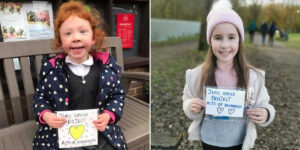
But moments of kindness leave a lasting mark. One that stands out to me happened while I was on the streets with one of my signs of encouragement. I didn’t have any signs asking for money—God had laid it on my heart to simply share hope. One sign read, “Today Is Another Second Chance.” A tourist noticed it, came up to me, and gave me $20. He thanked me, saying he needed that message that day. I realized in that moment that no matter where we are in life, we can lift others up and show compassion. Small acts of kindness can change someone’s entire day—or even their life.
Q: What does helping others mean to you?
A: Serving has always been part of who I am. My mother was a nurse, my father had a career in the military and civil service, and raising awareness for those in need comes naturally to me. Raising awareness is only the first step. Ultimately, my goal is to help people move from the streets into permanent housing.
Unfortunately, homelessness has become a business. There’s often more incentive to manage homelessness than to end it. But there are people who genuinely want to make a difference. My mission is to connect with those individuals, unite our efforts, and make a real impact—working toward a time when homelessness can be truly eradicated in the United States.
Q: If you could give one final message to others, what would it be?
A: Take the time to know people before you judge them. Everyone has a story. Listen with an open heart, and ask yourself how you can help.
I’ll leave you with a passage from the Bible, Matthew 25:34-40 (NIV):
“Then the King will say to those on his right, ‘Come, you who are blessed by my Father; take your inheritance, the kingdom prepared for you since the creation of the world. For I was hungry and you gave me something to eat, I was thirsty and you gave me something to drink, I was a stranger and you invited me in, I needed clothes and you clothed me, I was sick and you looked after me, I was in prison and you came to visit me.’”
“Then the righteous will answer him, ‘Lord, when did we see you hungry and feed you, or thirsty and give you something to drink? When did we see you a stranger and invite you in, or needing clothes and clothe you? When did we see you sick or in prison and go to visit you?’”
“The King will reply, ‘Truly I tell you, whatever you did for one of the least of these brothers and sisters of mine, you did for me.’”