The day I found out I was pregnant in 2006, I felt a rush of excitement mixed with deep nervousness. I desperately hoped for a girl, knowing that if I carried a boy, there was a higher risk of serious genetic conditions. Muscular Dystrophy ran through my family—many relatives had been affected, including my own father. My pregnancy itself was mostly uneventful, until around 30 weeks when my OB’s office called and asked me to come in immediately. “Something showed up in your blood work,” they said. My heart sank. A few days later, my doctor explained there was a possibility of Spina Bifida and recommended a 4D ultrasound. Thankfully, the ultrasound showed no signs of Spina Bifida. But that same day, I learned I was carrying a boy.
On December 1st, 2006, everything changed. I went to our local hospital for a routine weekly stress test, but after several hours, the doctor was called in and told me to prepare for induction. My baby’s heart rate could not sustain itself, and there was a real chance I would need an emergency C-section. By that evening, I was rushed into surgery. My beautiful son, William, was born weighing just 4 pounds, 11 ounces. The moment I held him, I felt an uneasiness I couldn’t explain—something just didn’t feel right. He struggled to feed and had persistent stomach issues. I voiced my concerns again and again, but no one seemed to listen.
I continued fighting for answers as we visited doctor after doctor. William missed every major developmental milestone, and I knew something was wrong. Finally, after a year and a half of searching, I found a doctor who truly listened. In February 2008, William was referred to Riley Hospital for Children to see a Developmental Pediatrician. At that very first appointment, he was immediately sent to Neurology due to zero muscle tone and no head control. Later that year, in August, doctors discovered he was aspirating, which led to his first surgery to place a G-tube. A muscle biopsy followed, but heartbreakingly, the results were inconclusive.
When William turned three, his neurologist began questioning whether autism might be part of the picture. His significant developmental delays and fixation on round objects were major indicators. At age five, he was officially diagnosed with autism, and our journey took on a new shape. Still, his medical challenges continued, and for years we searched for answers. Time and again, doctors told us the same thing: “He’s a medical enigma. We’ve never seen a case like him before.”
In December 2018, our lives were shaken once more. William became dangerously ill. I called every doctor at Riley Hospital, begging for help, but only his GI specialist could see him. We rushed to IU North Hospital, only to be told we might wait one to two days for a bed at the main Riley campus. I knew William couldn’t wait. We went home, but the next day, after school let out, I couldn’t stand by any longer. I picked him up, drove two and a half hours, and headed straight to Riley’s Emergency Room, determined not to leave. As I pulled into the parking lot, the nurse called—there was a bed available.
William was immediately admitted, placed on oxygen, and started on IV fluids. Doctors from nearly every department rushed in. That was when we met a Geneticist who explained that William’s ammonia levels were dangerously high due to the amount of Depakote he was taking. They also ordered genetic testing. We spent the entire week of Christmas 2018 in the hospital. After six agonizing months of waiting, the Genetic Counselor finally called. William was found to have two extremely rare X-chromosome mutations—STARD9 and SLC9A7—so rare that research is still ongoing to find others with the same conditions. As William grew, his needs continued to increase, and his feeding tube became permanent.
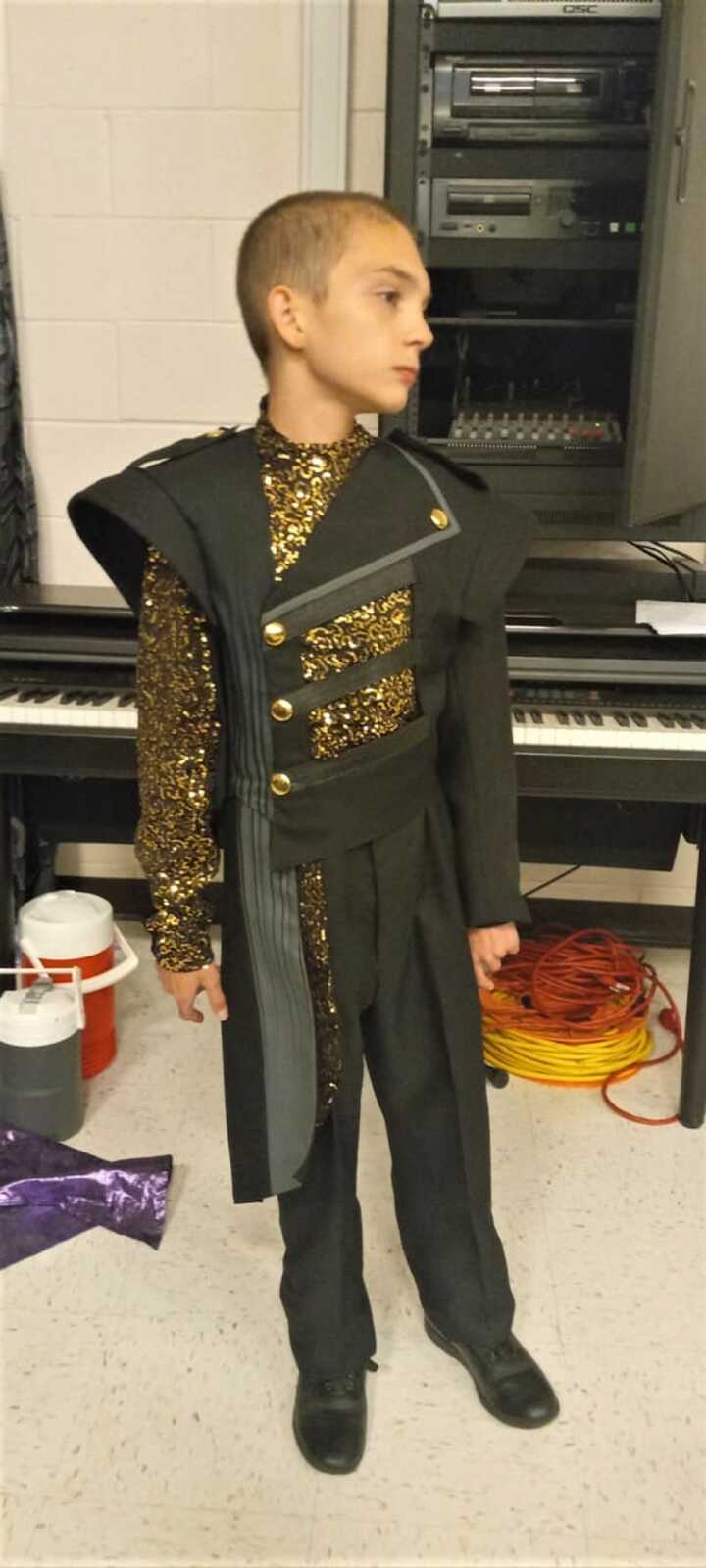
Despite everything, William never stopped dreaming. Since about fourth grade, his biggest wish was to be part of a marching band so he could march in local parades. When he entered junior high in seventh grade, his band director, teachers, and school nurse worked together to make that dream a reality. Though he was the size of an eight-year-old and had limited mobility, he proudly played a triangle specially fitted with a grip. His teacher, the incredible Ms. Inman, would sit beside him at concerts, gently tapping his shoulder to signal when it was his turn to play.
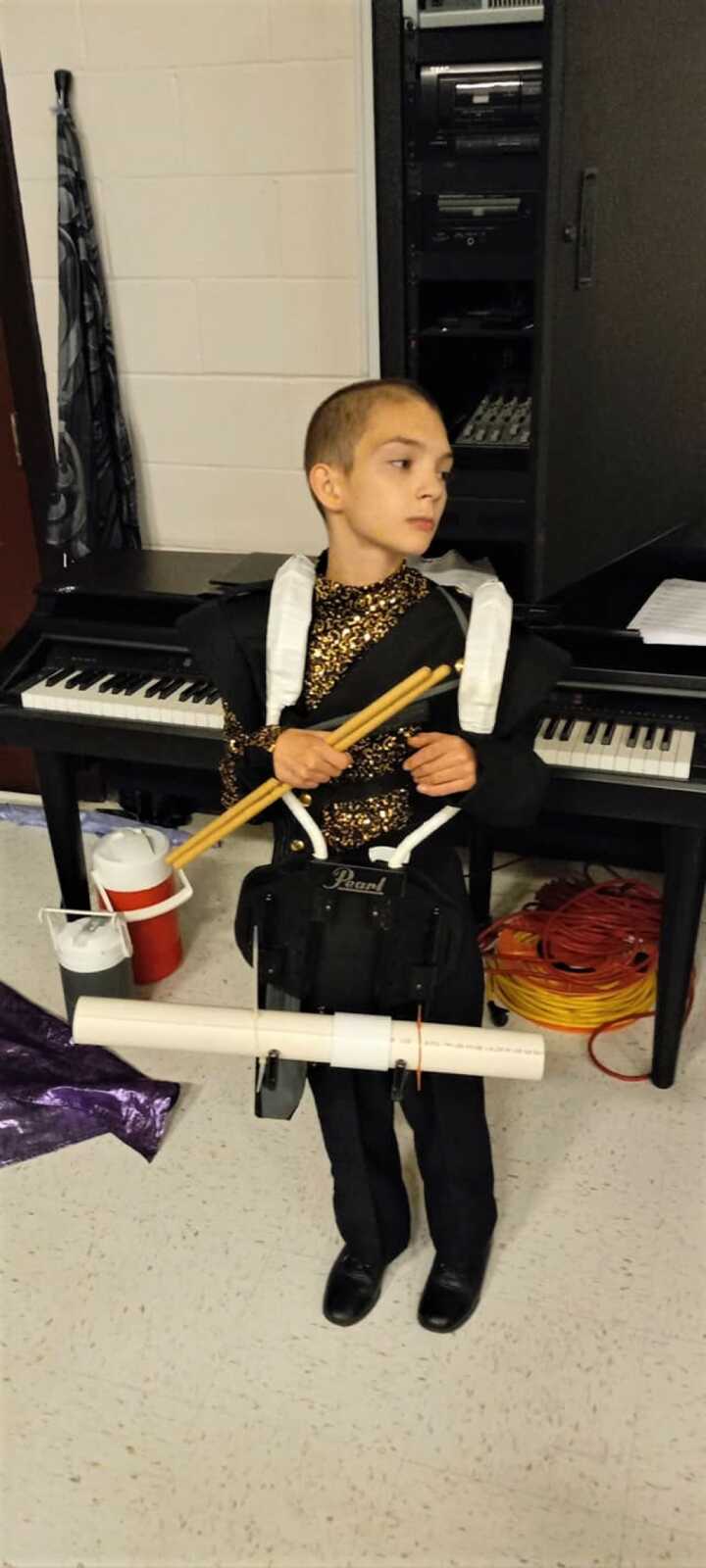
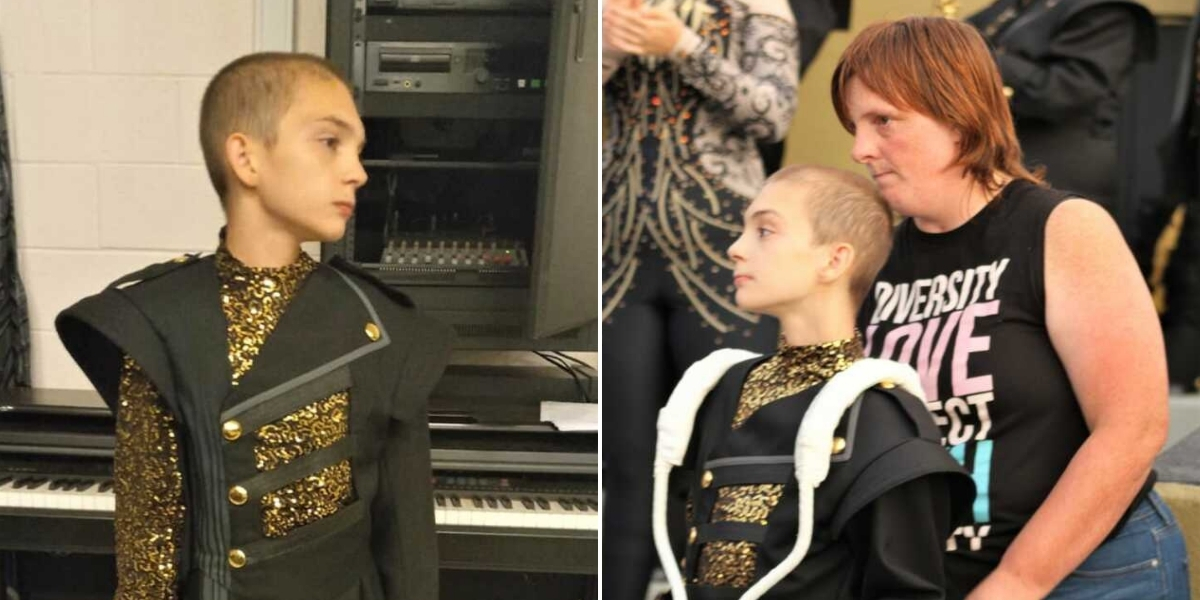
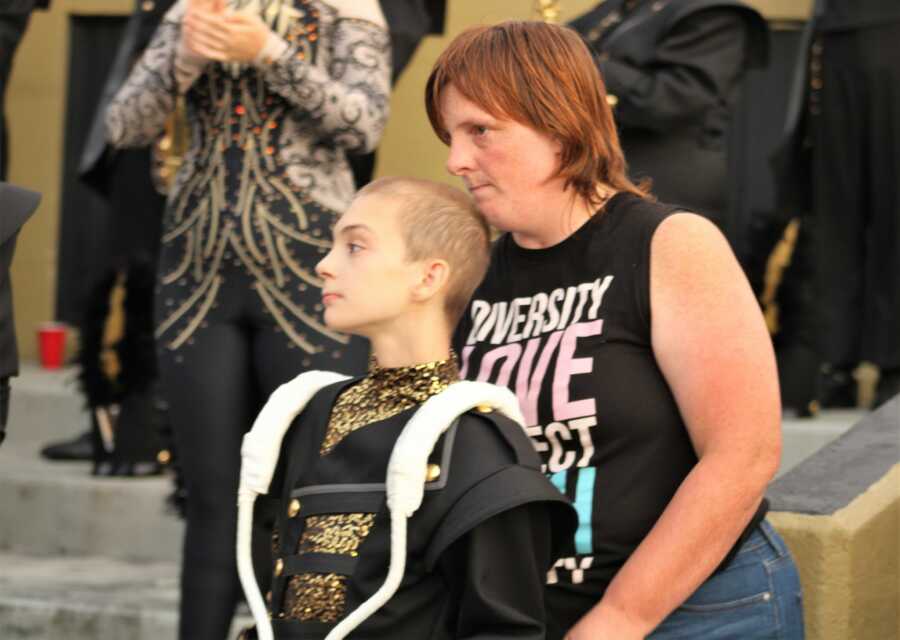
This year, William began his freshman year of high school—finally old enough to officially join the marching band. His new band director, Mr. Burris, had just moved from Michigan, and although Ms. Inman had moved to another school, our amazing school nurse Jo was still there. Mr. Burris ensured William’s needs were met both in and out of class, and Jo proudly fitted him in his official black-and-gold Golden Pride uniform. He was welcomed with open arms.
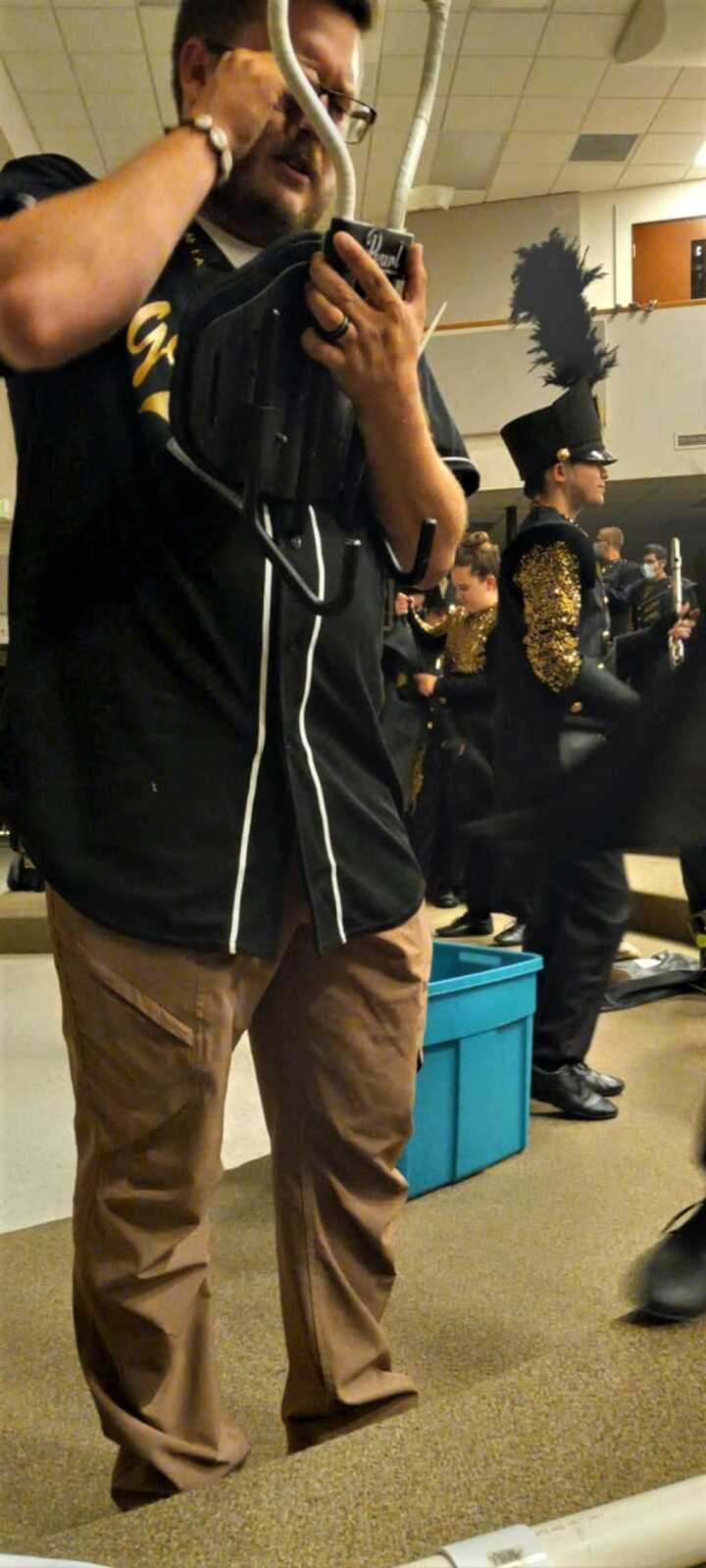
At rehearsals, the percussion section became “his crew,” answering his endless questions and letting him play their instruments. But it wasn’t just the band—the entire Washington community embraced him. On September 3rd, 2021, during the first halftime performance of the season, William was anxious and wanted to feel included. Without hesitation, Mr. Burris grabbed a drum harness and some PVC pipe and created a custom drum just for him. That night, William beamed with joy, glowing from ear to ear as his bandmates cheered him on.
Our journey has been long, exhausting, and often painful, but it has also brought together an entire community around one extraordinary little boy. Autism—or any disability—does not define a person. It simply reflects a different way of learning, a unique perspective on the world. Through William’s eyes, the world is vast, meaningful, and filled with possibilities.
To parents and caregivers just beginning this journey: don’t give up. Keep pushing forward. Every tear, hug, struggle, and smile is worth it. With the right support system, anything is possible. His teachers and mentors worked tirelessly to ensure William was included in every dream he dared to have. In a world where you can be anything, always choose kindness. True inclusivity means opening your heart and mind, making room for someone to belong, and welcoming them into a family that helps them succeed.