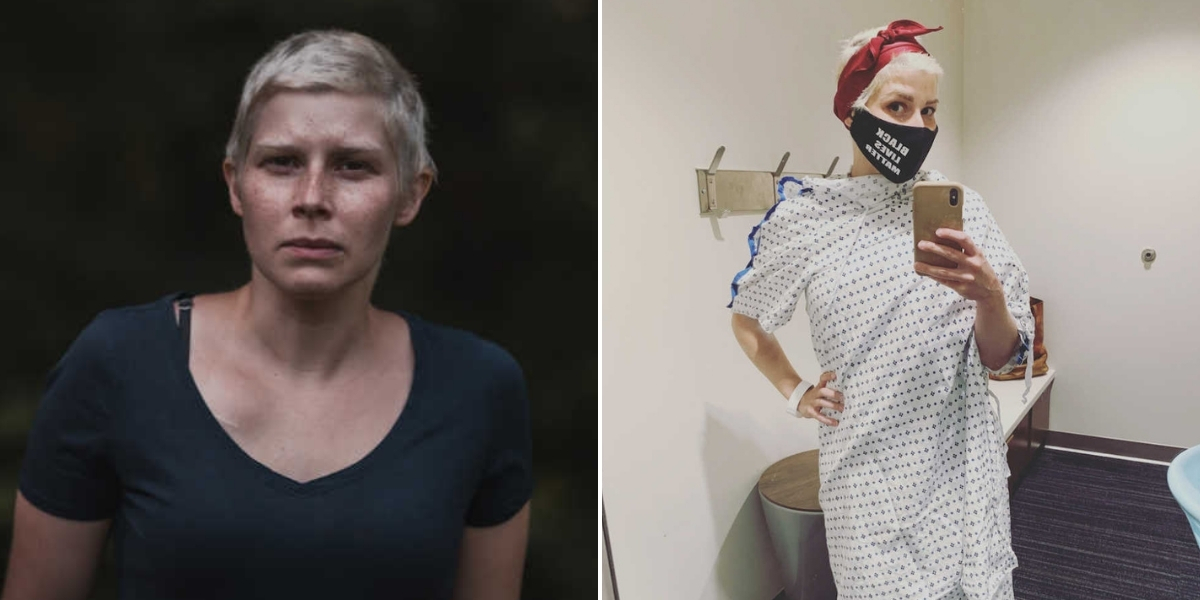
In March 2020, I was finally ready to step back into the real world. Just weeks earlier, I had completed my final chemo infusion for a rare soft-tissue sarcoma and was transitioning to an oral chemotherapy with more manageable side effects. After a year defined by nausea, endless hours on the couch, and deep loneliness, I felt hopeful again. I was preparing to return to my job as an elementary school teacher and, in many ways, to reclaim the life I had put on hold.
I don’t remember exactly where I was when I first heard about COVID-19. I’d seen reports coming out of China before Christmas, but I naively assumed it was something that wouldn’t reach us. Still, I contacted my boss in January, just in case. “This sounds like it could be really bad,” I said. “If it does come to the U.S., it won’t be safe for me to be back in the classroom.” At the time, it all felt distant and unlikely. I planned to return to school on March 30, 2020, after Spring Break. I had no idea I would never step foot in that school again as a teacher.
March 11, 2020 was the last normal day, though I didn’t realize it then. I decided not to go into New York City for a Broadway show the next day because rumors were starting to swirl that things were far worse than we knew. I’m embarrassed to admit I cried. After everything I’d been through, I desperately wanted normal life back, and theatre was a huge part of that. To comfort myself, I baked a pie for my aunt’s birthday and drove to her house for dinner with her and my uncle. We chatted over appetizers at the kitchen island, shared a relaxed meal, and cut into the pie afterward. I don’t remember what we talked about, which tells me how ordinary it all felt. Before leaving, I hugged them both. It would be my last hug for 366 days.
By 1 p.m. the following day, the world had shifted. When I heard Broadway was shutting down, my blood ran cold. An usher from the show I was supposed to attend had tested positive for COVID, and productions were closing to protect public health. As a longtime drama teacher and theatre lover, I knew that if New York was willing to sacrifice one of its biggest economic engines, the situation had to be dire. It took another week for the rest of my normal routines to vanish, but that moment marked the beginning of everything changing.
The days that followed blurred together. Any lingering sense of safety disappeared, replaced by fear of nearly everything. After 12 rounds of chemo, I was already immunosuppressed and used to closely monitoring my white blood cell counts to see how well my body could fight infection. Even on my best days, I was vulnerable and no stranger to urgent care visits. I knew this virus—one even experts didn’t fully understand—could devastate my body. While healthier people around me hoped it would all pass quickly, I waited in constant dread. I stayed inside my apartment, venturing out only briefly so my dog could go outside.
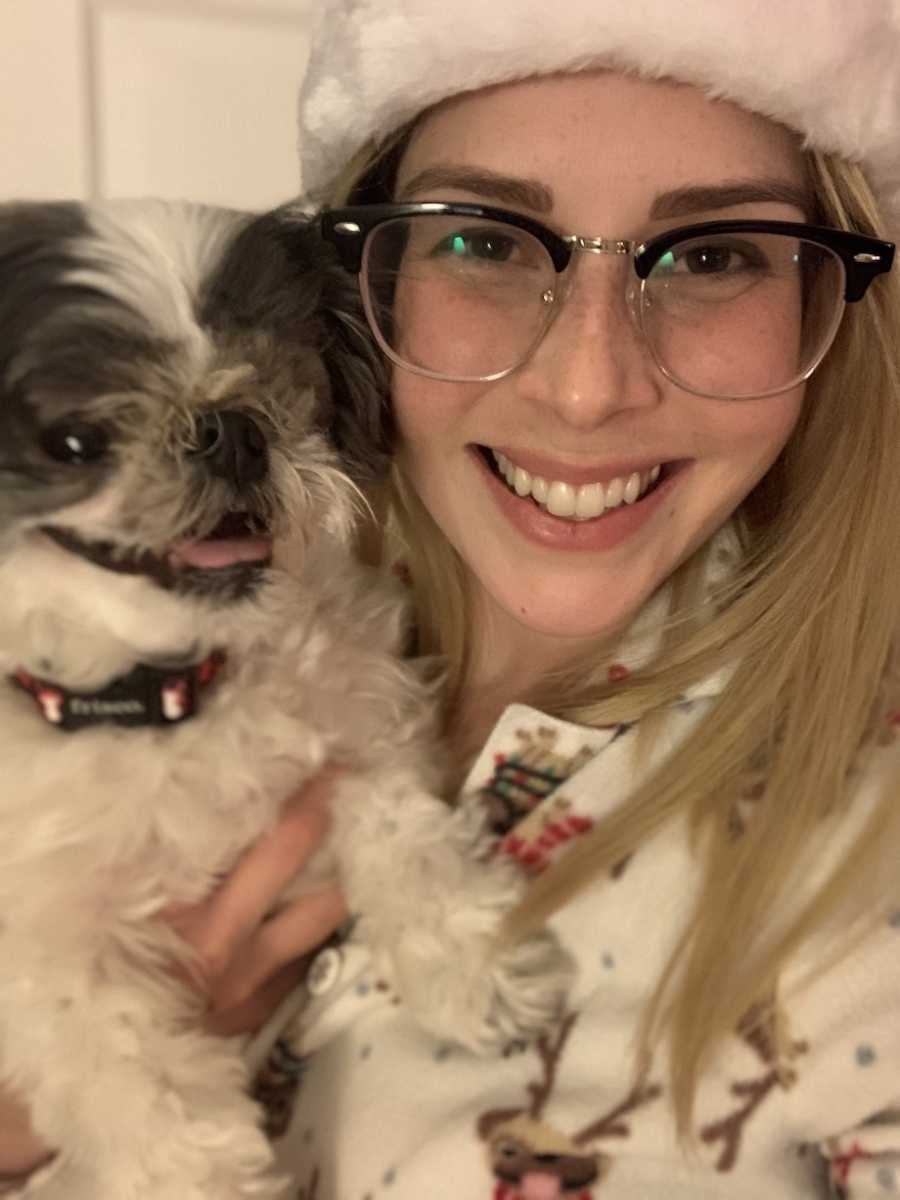
I was incredibly grateful for the support I had early on. Two friends came to pick up my laundry because I was terrified of the laundromat. They wore masks and sanitized the doorknob after opening my door. I placed my first-ever grocery delivery order, and soon my parents asked me to make a list of essentials. With rumors circulating that food shortages were possible, I was encouraged to stock up for at least two weeks. Looking out my window at my quiet suburban street, it felt like nowhere—not even home—was truly safe.
Soon, the rest of the world caught up. Schools closed. Stay-at-home orders were issued. We clung to every word from public health officials, searching for hope. As people talked about bubbles and distancing, I realized I was a bubble of one. It was just me and my dog, just as it had been throughout my year of chemo. This time, though, I couldn’t include anyone else. And with that realization came another: if I got sick, I would face it alone.
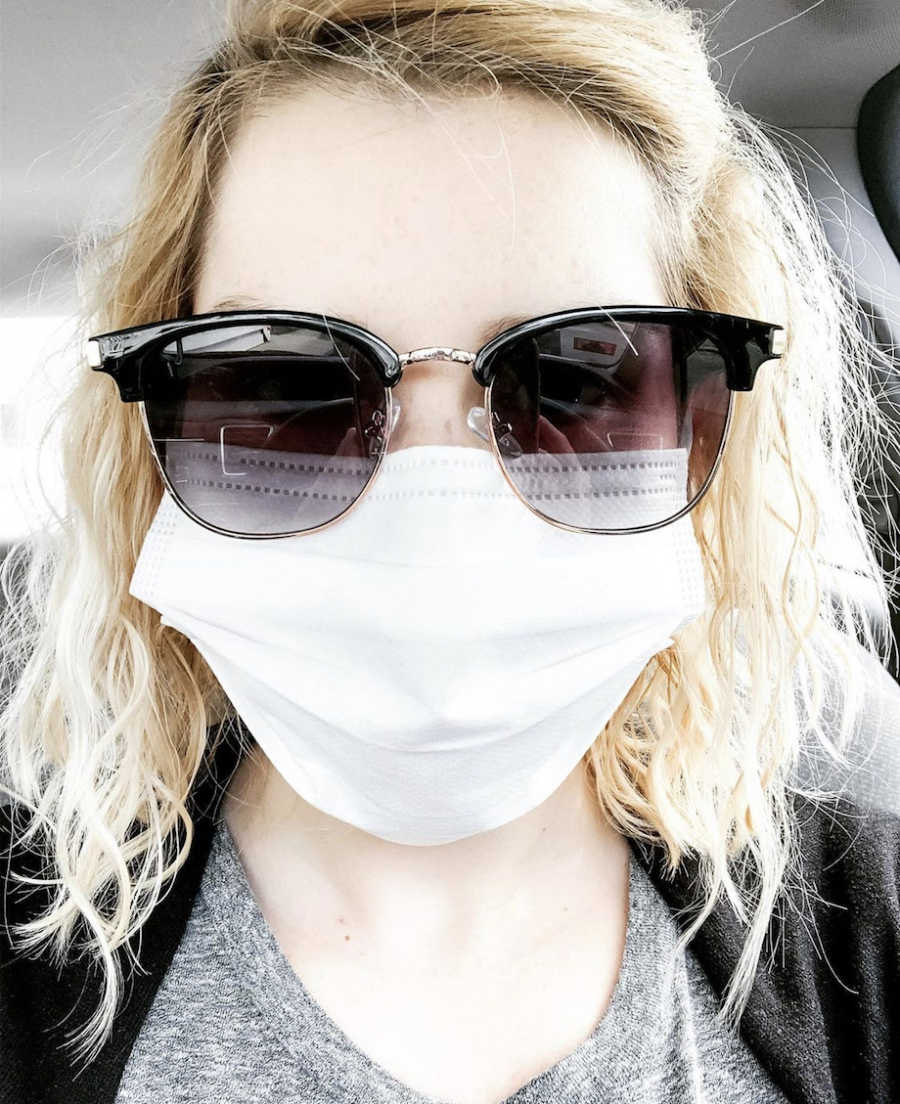
What surprised me most was how much my cancer experience had prepared me for the pandemic. I was already practiced in strict precautions—constant handwashing, temperature checks, watching for symptoms. Mentally, I had an advantage too. Cancer had taught me how to live with uncertainty, to cancel plans I’d been looking forward to, and to sit with fear when answers were unavailable. At times, it was frustrating to hear others voice concerns I’d been living with for a year. I bit my tongue as they wondered who might get sick or confronted their own mortality, thinking, I’ve been saying this all along.
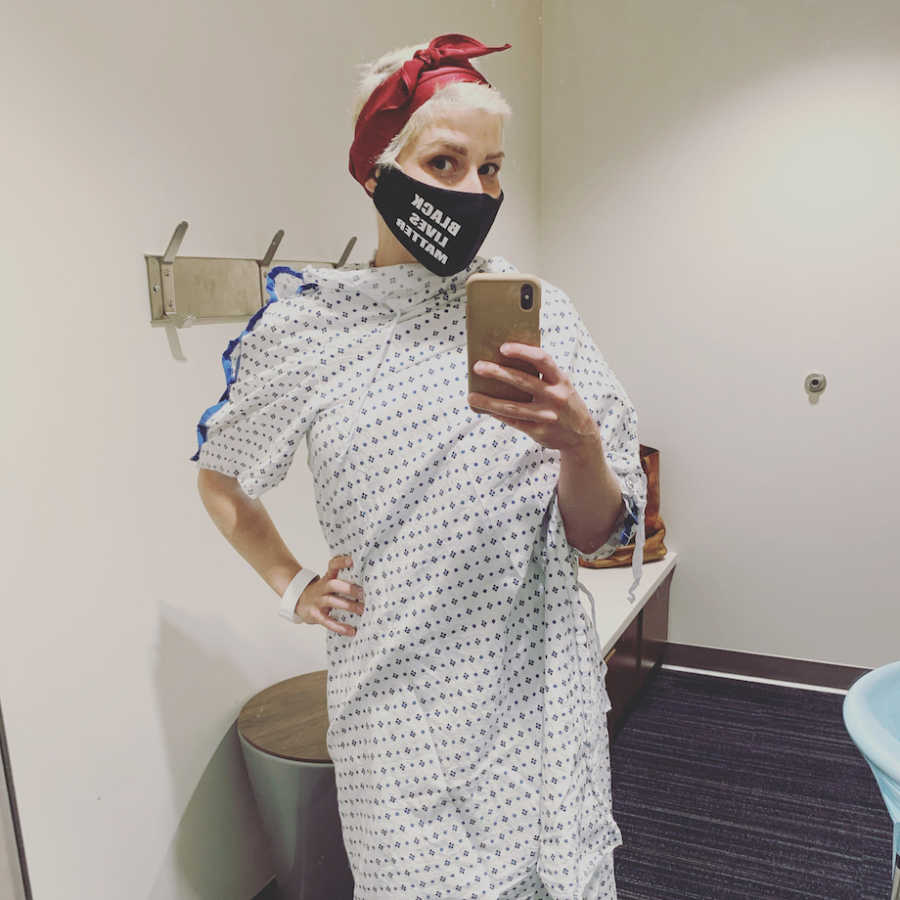
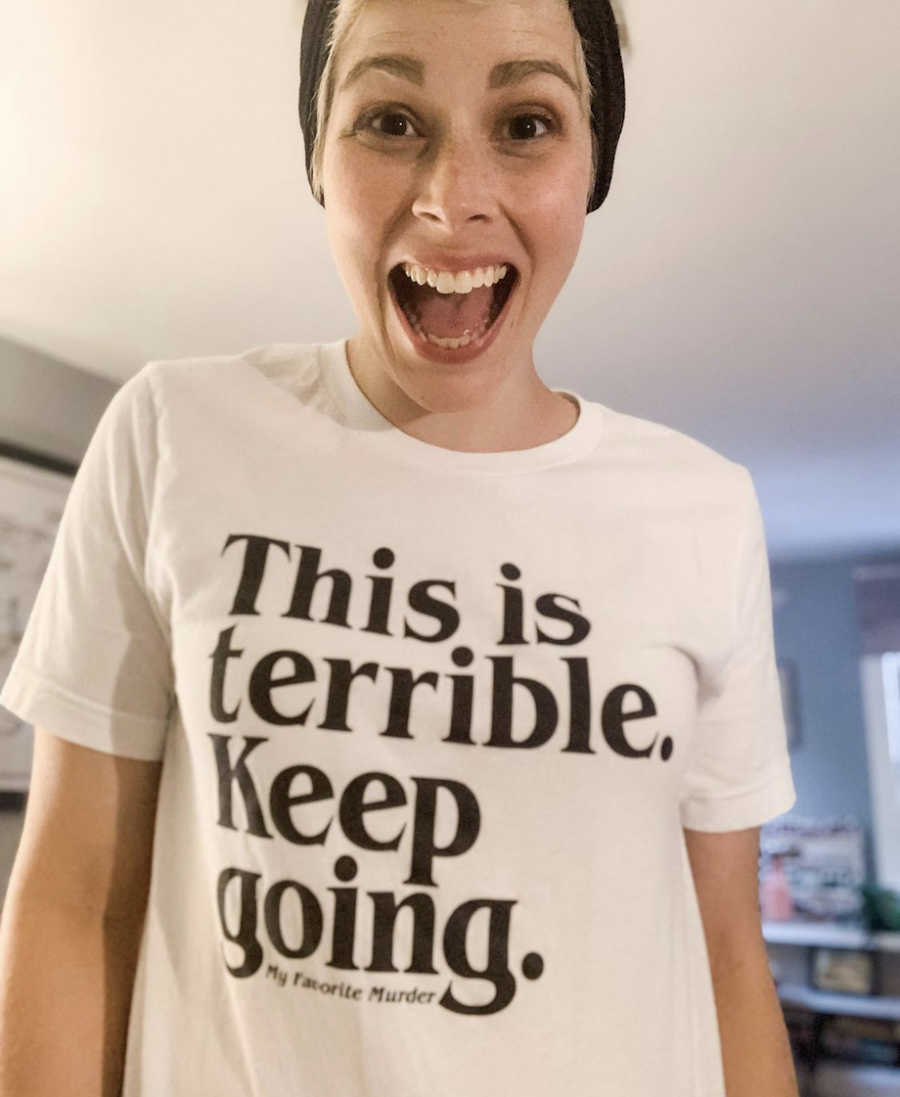
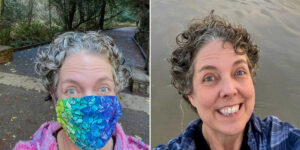
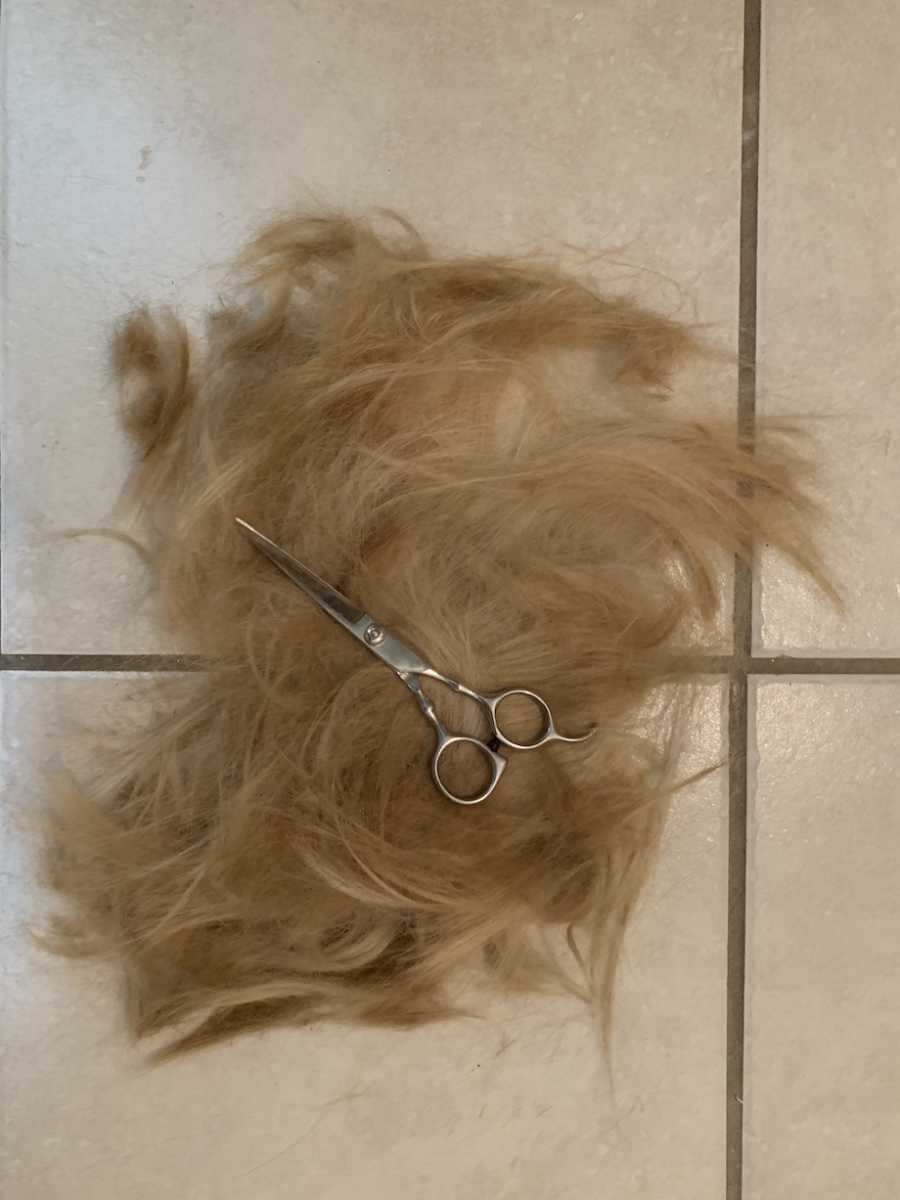
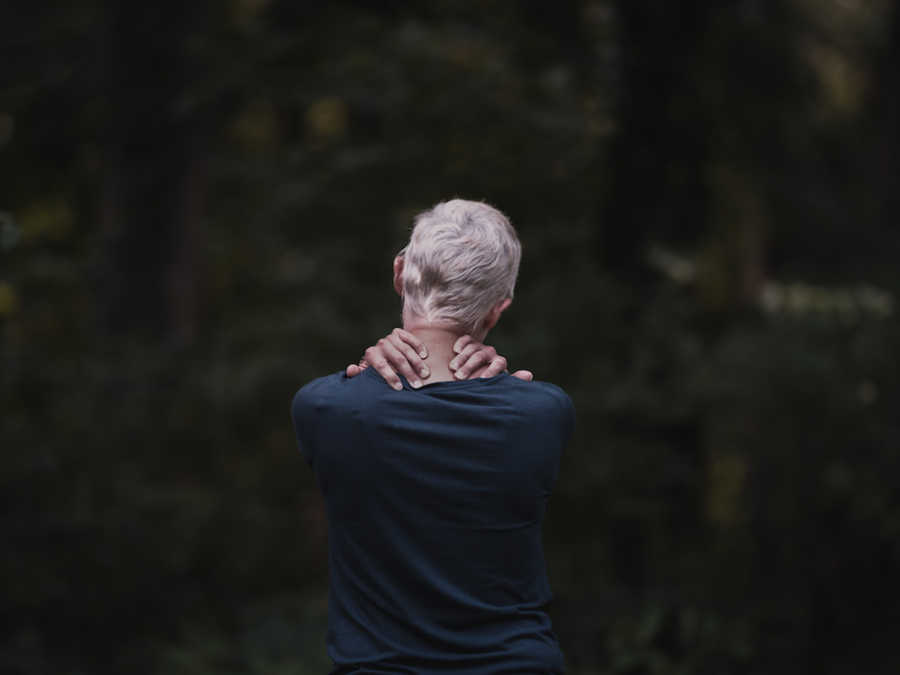
As COVID tightened its grip on the country, my cancer journey continued. My new medication turned my hair completely white, stripping it of pigment so it wouldn’t take dye. Since I hadn’t lost my hair during chemo, this change hit hard. After many sleepless nights, I made the painful decision to cut off my shoulder-length hair and leave only the new color. Alone in my bathroom, I shaved it myself. I understood it was out of my control—but I longed for someone to hold my hand, or even to help even out the back, to make it just a little easier.
A few weeks later came another scare. My new treatment caused my liver counts to spike, and doctors briefly feared new tumors. Driving alone into Center City Philadelphia, facing the possibility that my health was worsening, was terrifying. Thankfully, tumors were ruled out, but I had to stop treatment and begin weekly blood work. These appointments became my only regular outings. Even at a medical center that took excellent care of me, my body tensed every time I entered a building full of people—and where COVID testing was happening.
While my own medical fears unfolded, the country endured loss after loss. I heard the stories—this relative tested positive, that friend lost a parent. The rising death toll felt deeply personal. To cope, I limited my news intake. Seeing people refuse to wear masks filled me with rage. I was exactly the person they were supposed to be protecting. Their carelessness made me feel invisible, expendable.
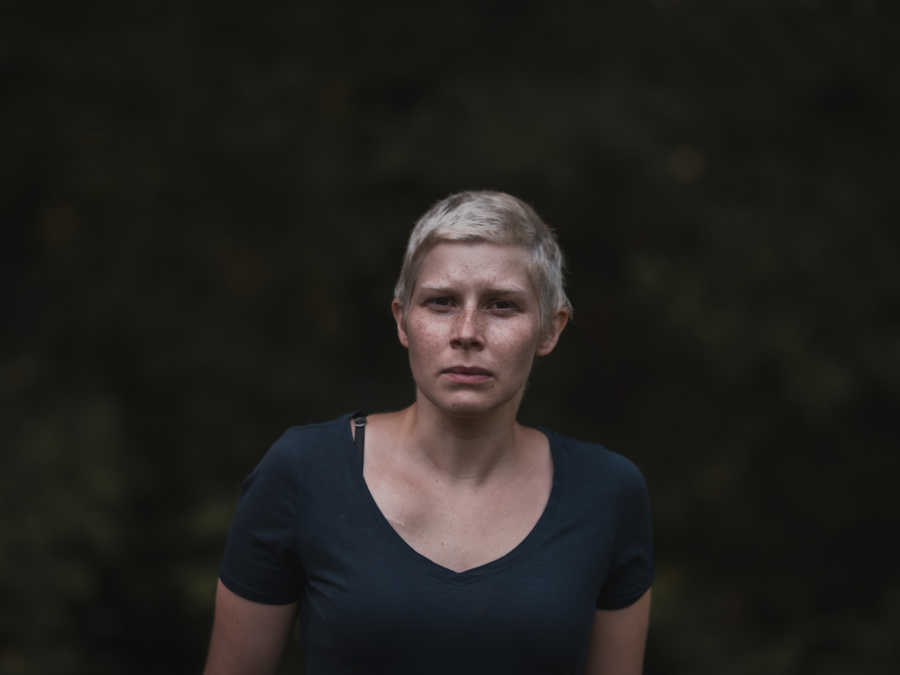
Time moved strangely. March felt both like yesterday and a lifetime ago. Friends began calling life before COVID “the before times.” Because I couldn’t safely work in person, I lost my job. I spent Thanksgiving and Christmas alone, doing my best to keep traditions alive, ordering dinner for one, and trying to stay positive. Days blurred together as I waited for approval for a new cancer treatment—and for some sign of hope. There were no dates to look forward to, no promises of relief. I was surviving, but barely, and I was exhausted.
Around Christmas, news of a vaccine began to circulate. I waited anxiously for my oncologist’s guidance, unsure if it would be safe for me. He didn’t hesitate—he strongly encouraged it, reminding me my body needed the protection. One of my closest friends, DJ, a doctor who had survived COVID while working on the front lines, was among the first people I knew to be vaccinated. I waited impatiently for my turn.
Then came the call. A friend managed to book appointments for her parents and offered to try for me, too. As she entered my information, she suddenly shouted, “It went through—you got it!” Tears streamed down my face. For the first time in months, I had a date on the calendar—and it meant hope.
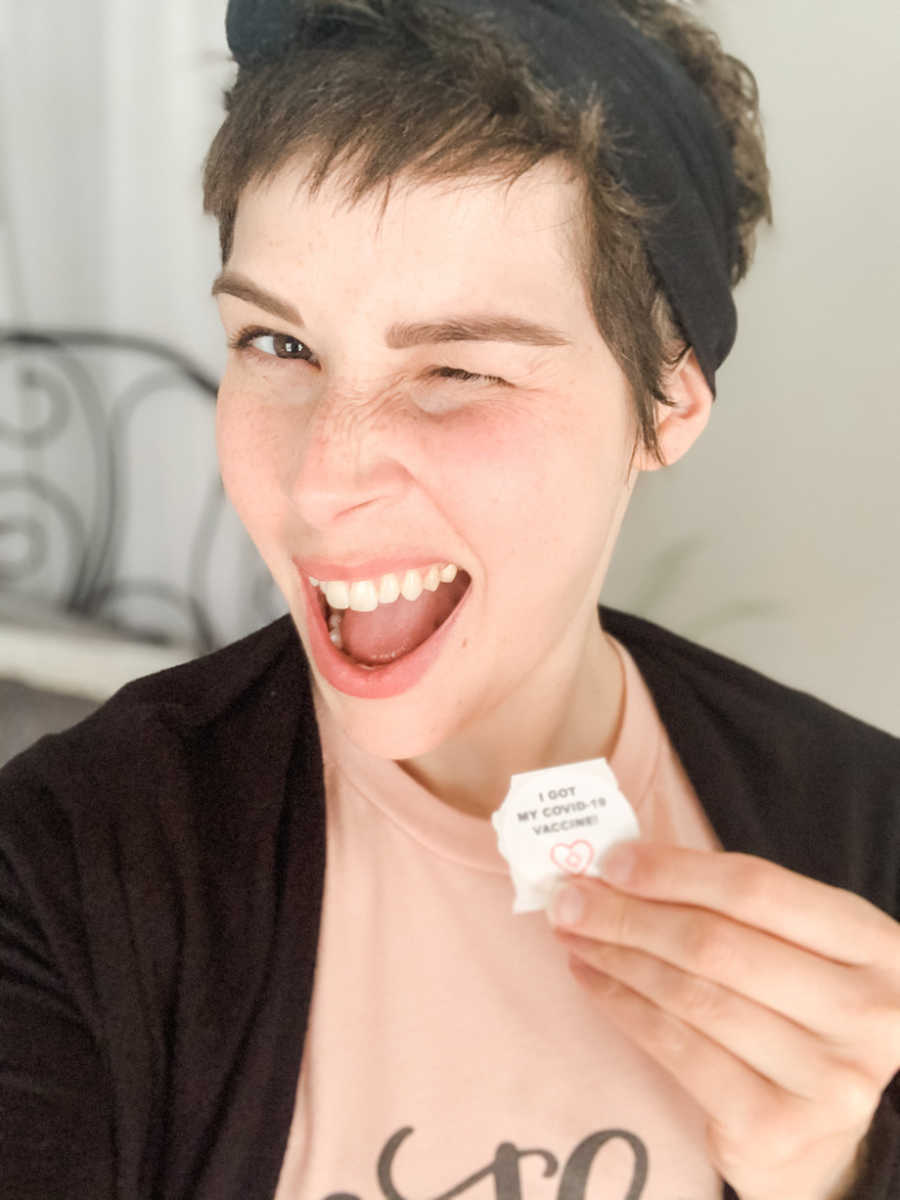
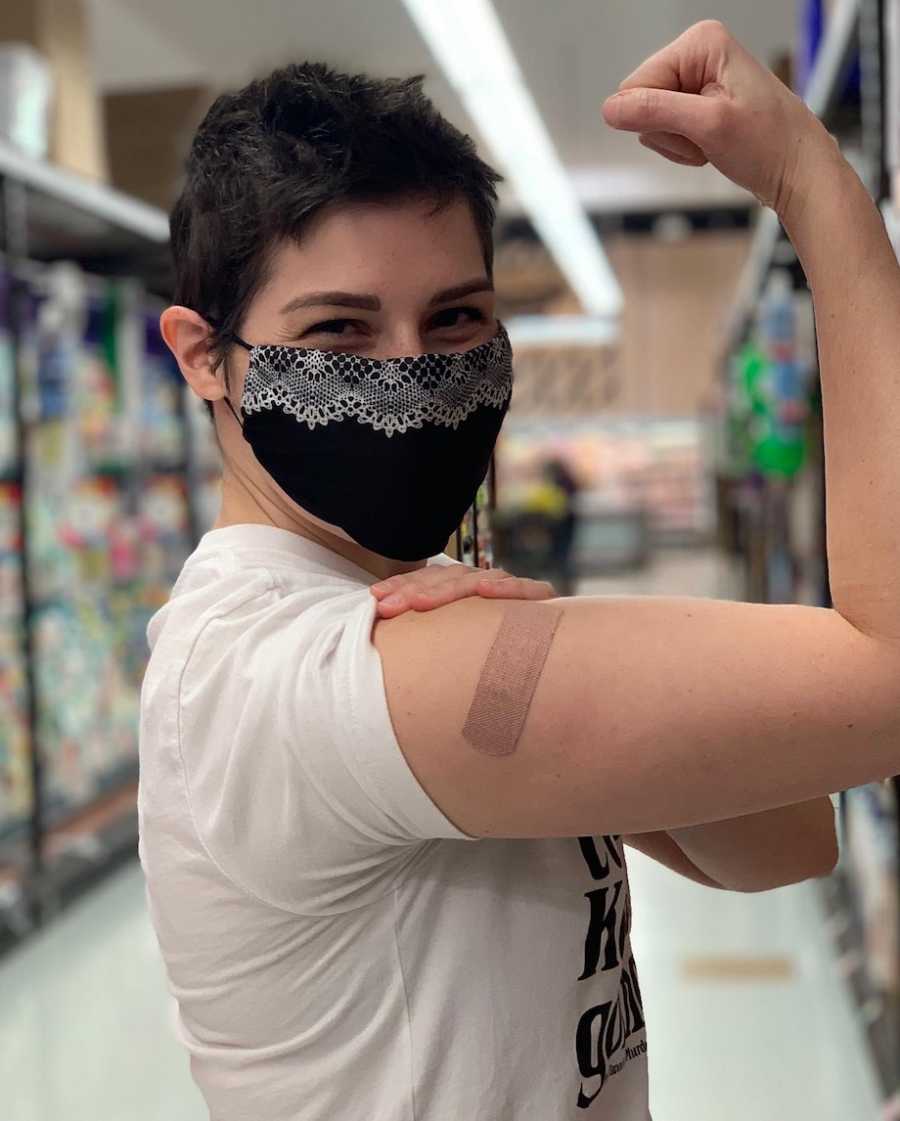
My first vaccine dose was filled with joy and excitement. I thought I might cry, but instead I smiled the whole time. My aunt and uncle—the same ones I’d had dinner with before the shutdown—were there too. We took photos and talked excitedly about future hugs.
The second dose was much harder. I expected side effects, but not how much it would feel like chemo all over again. I was nauseous, feverish, and aching everywhere. I reminded myself this was temporary, that it was bringing me closer to safely seeing the people I loved. I marked the day I’d be fully protected on my calendar and texted DJ: “Want a hug on March 13?” His response was immediate—“YES!”
When March 13 arrived, I could barely sit still. I watched out the window, heart pounding, unsure how I’d feel once he arrived. For months, I’d had nightmares about being near people unmasked. But when his car pulled up and we walked toward each other, smiling through tears, all my fear melted away.
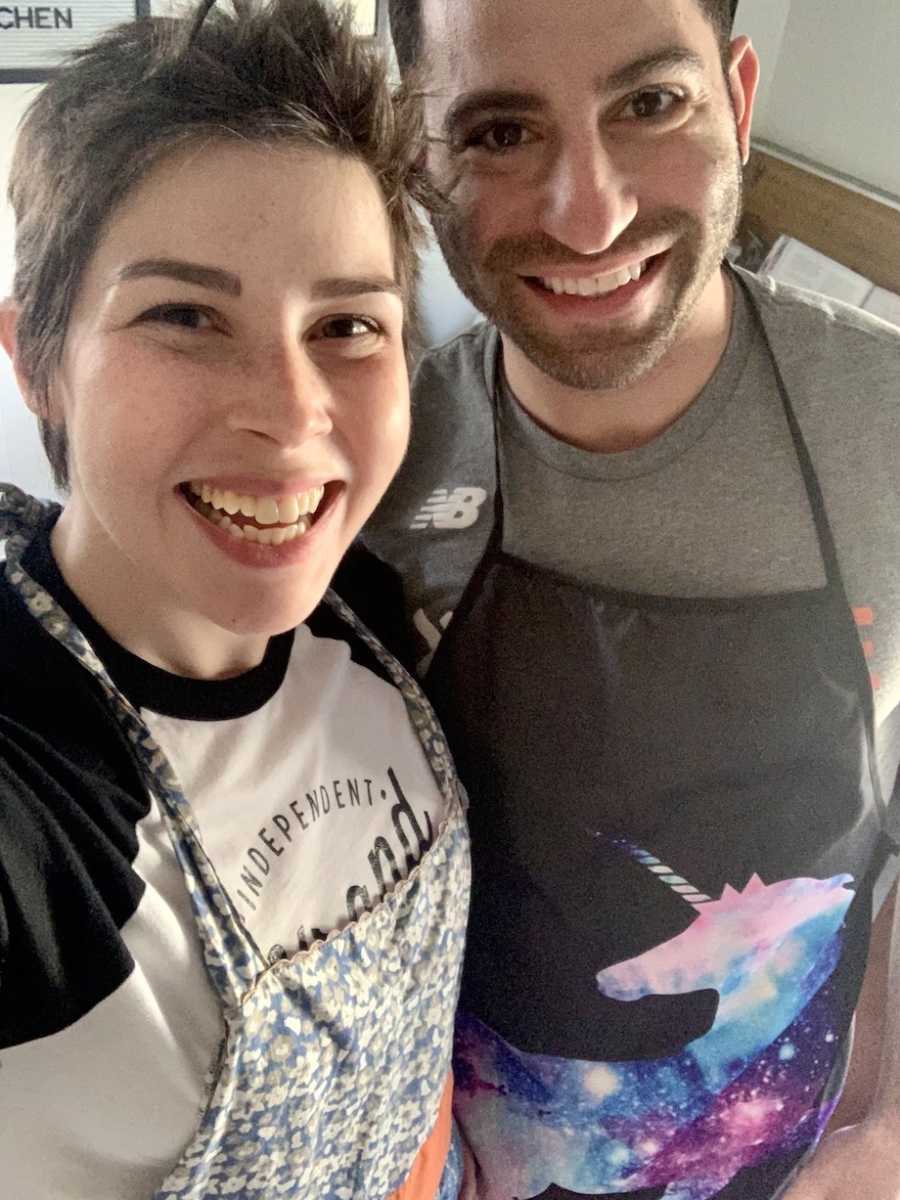
As we hugged, gratitude washed over me—not just for that moment, but for surviving everything that came before it. I was still living through two simultaneous nightmares—cancer and a global pandemic—but in that embrace, I was held. And in that moment, it was enough.