I know what I’m about to share may feel heavy or triggering, but I also believe stories like mine can save lives. My world changed the day my dad died by suicide, and telling this truth might be the sign someone needs. If you’ve been waiting for a reason to stay — let this be it. Please, stay.
It was 7:30 a.m. on October 19, 2011, when loud pounding pulled me from sleep. I assumed my dad was waking me for cosmetology school. Instead, my 12-year-old sister, Kourtney, stood there terrified. “Dad’s not waking up and he has a bad nosebleed,” she said. Those words echoed as I sprinted toward his room, heart pounding, mind blank, everything moving in slow motion.
To picture the moment, you have to understand our house. My dad and sister lived in the main area, while I stayed in an apartment above the garage, on the opposite end. As I ran, I yelled back for Kourtney to stop at the kitchen until I knew what was happening.
The distance to his door took less than two minutes, yet it felt endless. The hallway stretched like it was refusing to let me get there. When I threw open his bedroom doors, soft morning light leaked through the curtains. Everything was still. Instinctively, I reached the nightstand phone and dialed 911, never imagining I’d make that call for my own dad. I described what I saw: my father lying in bed, a faint tint of blue in his skin, blood beneath one nostril.
My brain tried to reject it. Surely he’d sit up and laugh, tell me it was a cruel joke gone wrong. The dispatcher asked me to check for a pulse, so I put the phone on speaker, reached for his wrist, and felt nothing. I hit his chest — not too hard, afraid I might hurt him — then climbed onto the bed and started compressions. Left, right, left, right — like muscle memory I didn’t know I had. For a second, I thought he moved. Then I realized it was only the lifeless weight of his body. My dad was gone.
Instinct took over as I tried once more to shake him awake — and my hand hit something solid. Thinking it was the remote, I picked it up. In the dim light it took a second for my eyes to adjust. It was the gun he had used.
Confusion washed over me. The operator’s voice pulled me back as I scanned his face. There was no obvious wound — until I noticed the small mark near his hairline. Suddenly, the room brightened, or maybe my mind stopped shielding me. I saw the blood near his ears, the headboard, the stillness of his expression. Reality crashed in: I was sitting on my dad, who had just shot himself. I bolted from the room, fumbled with the phone, and ran straight into my sister. I told her to grab the dogs while I called 911 again, somehow finding my cell without remembering how.
When I reconnected, the dispatcher immediately recognized me. She asked if I could do CPR now. I said, “No — he’s gone,” and she instructed us to wait outside. My sister sobbed that she wanted her dad. I was barely more than a kid myself, but I wrapped my arms around her and repeated, “You and I are going to be okay,” until the sirens grew louder.
The next hours blurred into questions, phone calls, shock. I watched myself detach — not crying anymore, just wondering how my sisters and I would survive. Overnight, we had to become adults.
People told me his death didn’t have to define me. They meant well, but those words minimized the trauma pressing down on my chest. I refused to be “the girl whose dad died by suicide,” and I tried to perform strength instead of feeling anything. I avoided places we loved, stopped listening to songs we shared, skipped therapy — all while insisting I was fine. But ignoring grief only pushed me deeper into it.
Eventually, the slow creep of depression caught up. This isn’t a story about staying stuck there, though — it’s about learning how my pain could guide me forward.
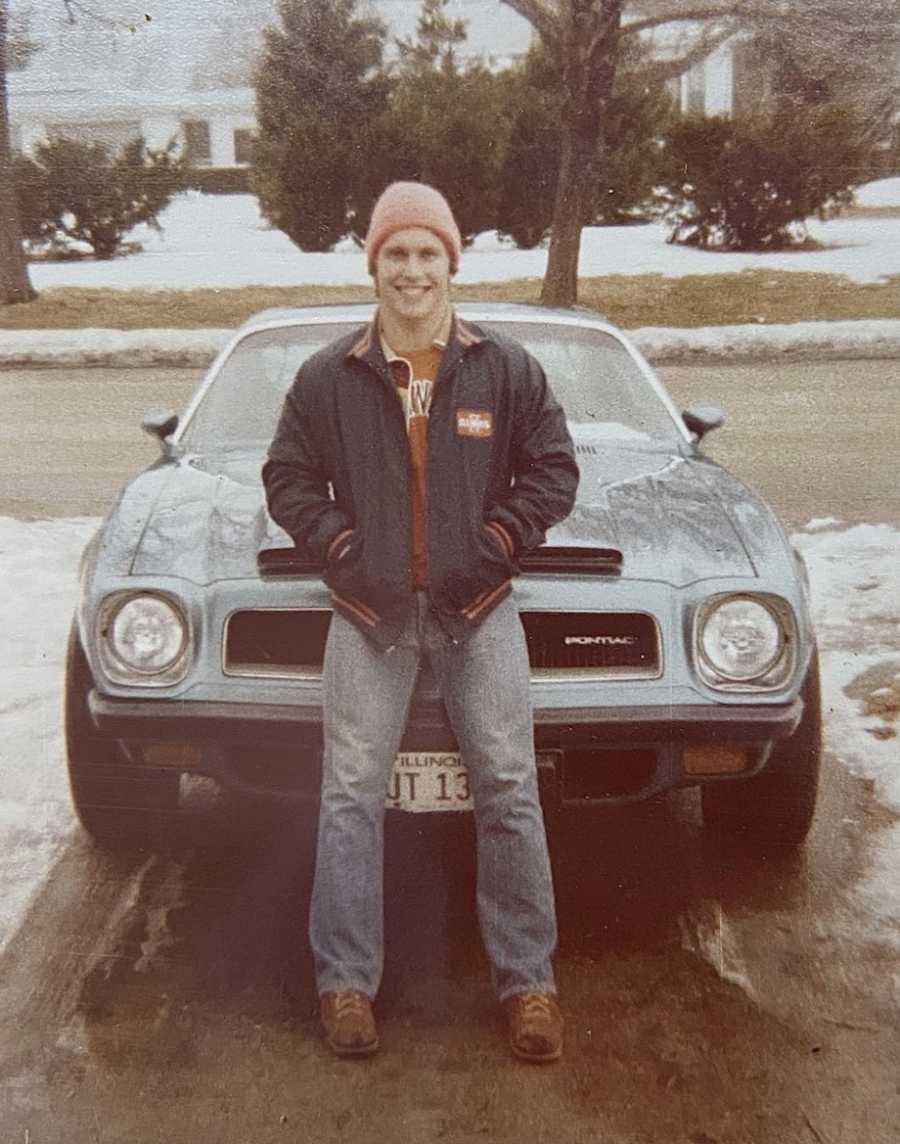
When my daughter was born in June 2019, everything shifted. I realized my dad’s death does define part of me — not the whole of me, but the part capable of helping others. I carried years of abandonment and unworthiness until I finally faced the truth: his decision was his alone. I didn’t cause it. I couldn’t have stopped it.
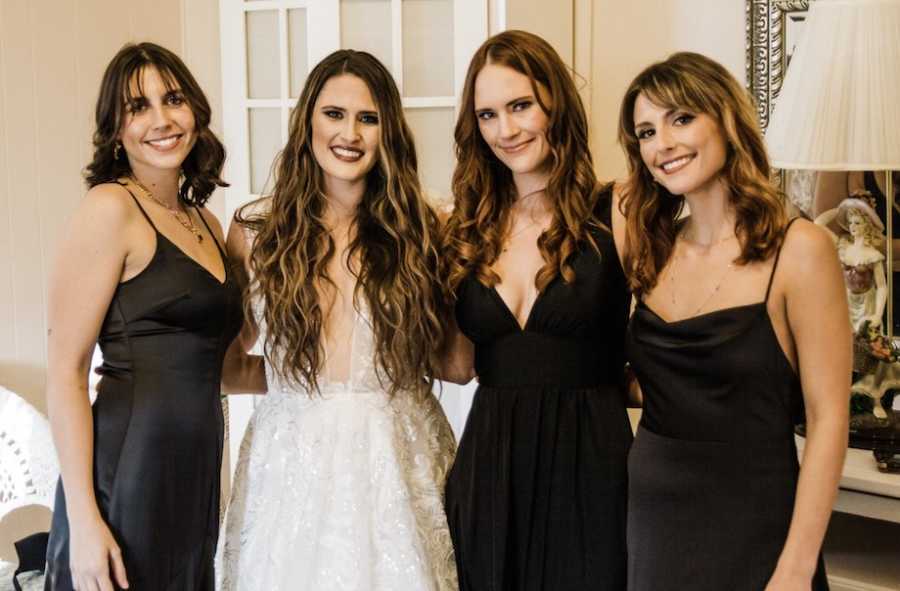
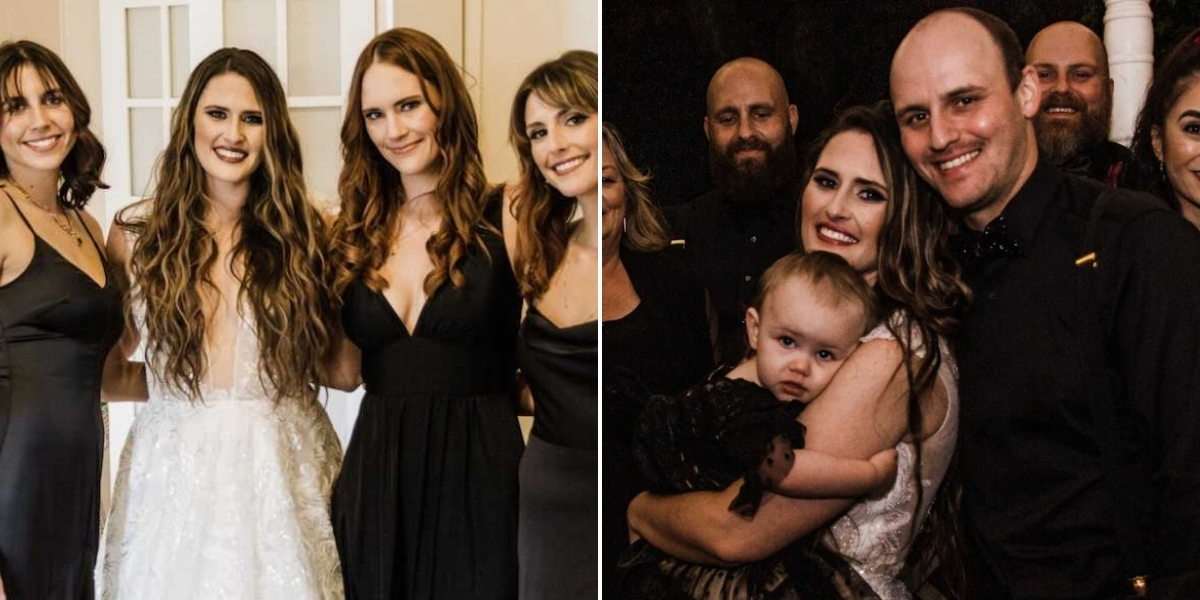
It took eight years to understand who I was in this new “dead-dad reality.” I read about trauma, parenting, and how patterns travel through generations. I recognized cycles I didn’t want to pass on. I returned to therapy, fell back in love with learning, finished my bachelor’s degree a decade after starting, and entered a master’s program. Today, I have a wonderful husband, a beautiful daughter, and a life I know my dad would be proud of.
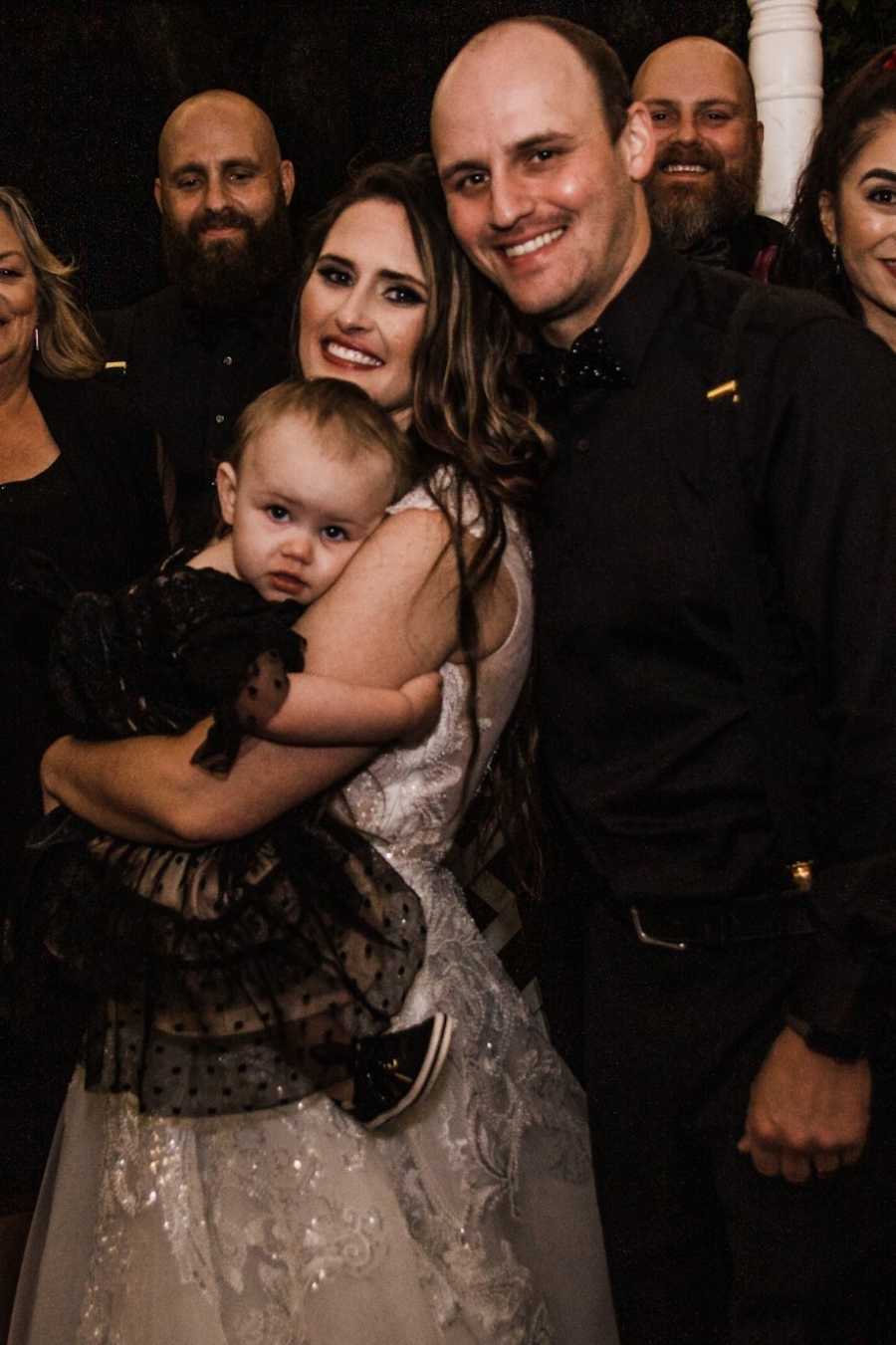
Writing has become my bridge — a way to connect, to heal, and to give meaning to something that once felt unbearable. Maybe a father will read my story and choose to stay. Maybe someone grieving will realize they were never the reason and that speaking out can change lives.
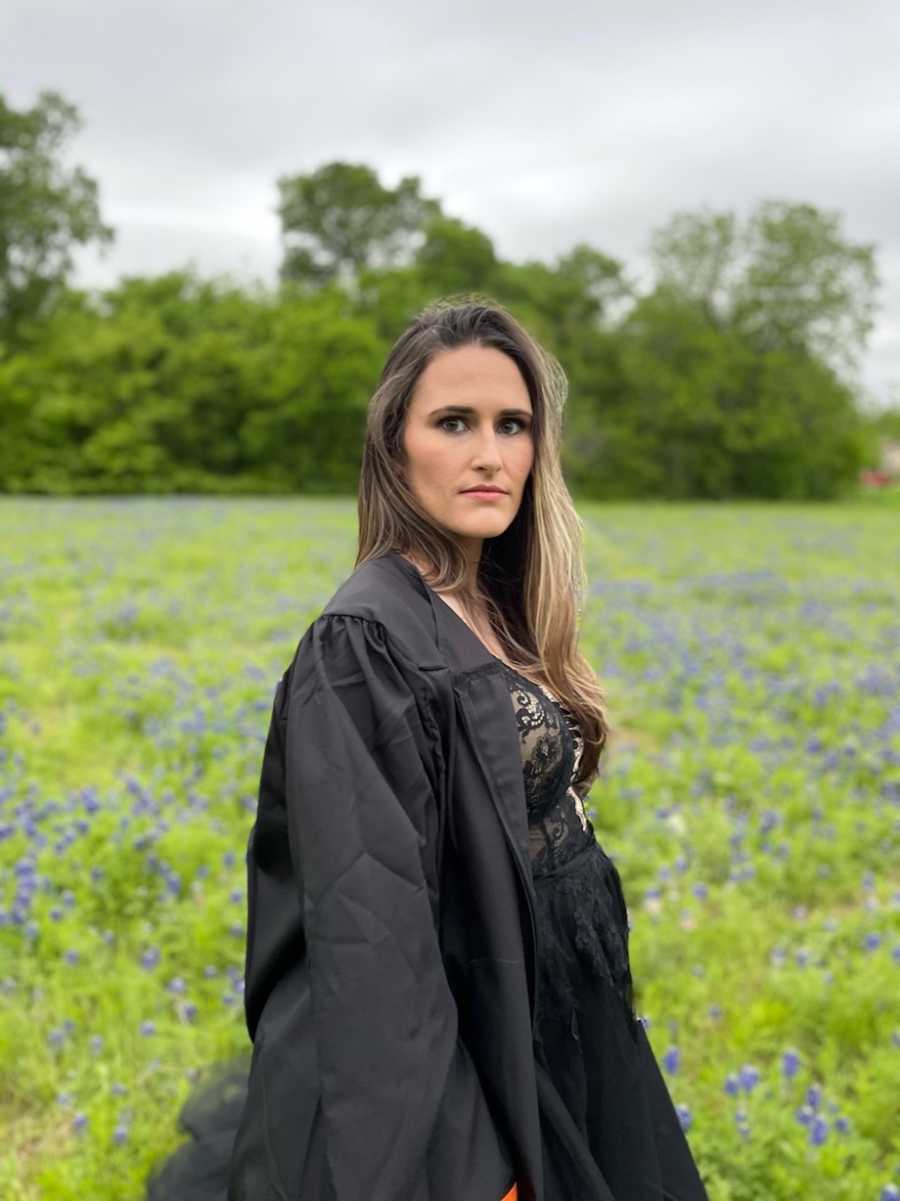
We don’t talk about suicide or mental health nearly enough. Shame keeps people silent. Yet research shows one suicide affects around 135 people — and each of them can reach others. Imagine how many lives could shift if we normalized honest conversations.
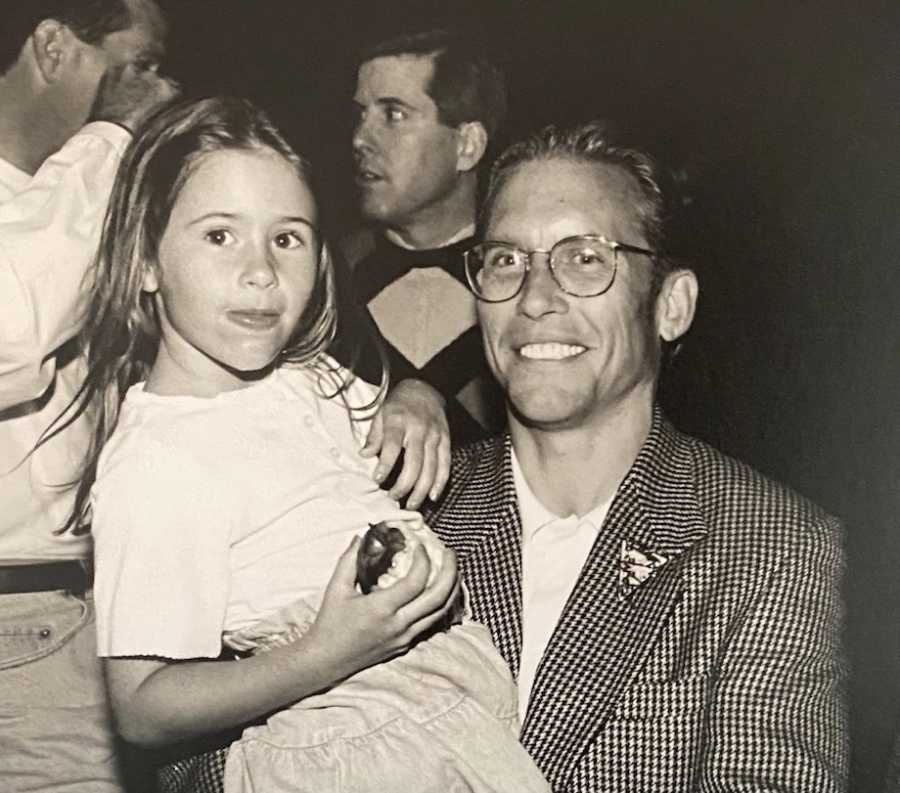
My dad’s death gave me, painfully, a purpose: to help others who carry invisible trauma. My advice to anyone struggling is simple — stay. Stay for sunlight, for laughter, for possibilities you haven’t seen yet. If you’re surviving loss, don’t bury that part of you; let it lead you toward healing and hope.
Let’s talk — about grief, about suicide, about the things we’re told to keep quiet. Let’s allow our experiences to shape us in powerful, compassionate ways and do our best not to pass this pain to the next generation. And above all — let’s stay.